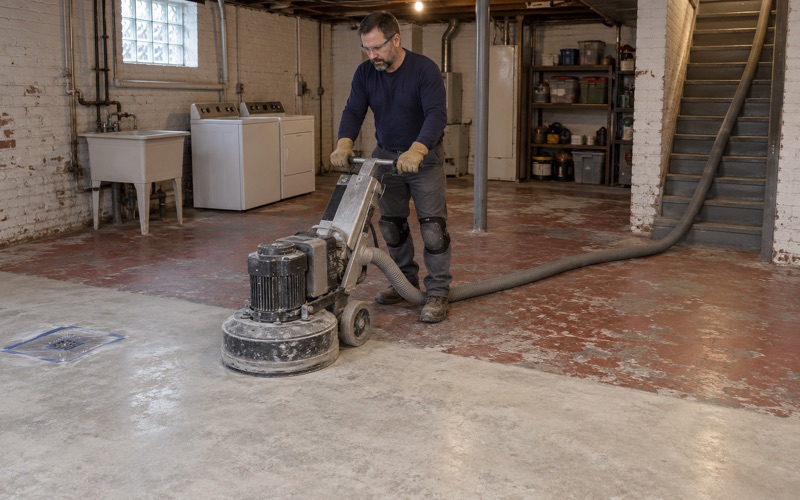
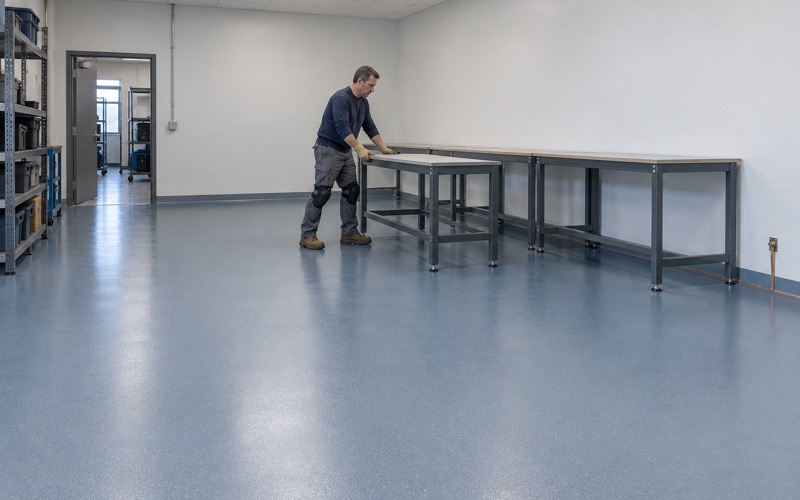
Berwyn Epoxy Flooring has spent more than 20 years on epoxy flooring in Wood Dale and the rest of our service area, and the work always begins at bare concrete rather than at a color chart. We open every slab with a diamond grinder or a shot blaster, and we do not acid etch. A mechanically profiled surface is the thing a primer actually holds onto, so it is never treated as optional.
Our written proposal names the product, the system build and the finished thickness, so an owner or a facilities manager can check what went down against what was quoted. Moisture testing is its own line in that scope, and the warranty exclusions are read aloud before anyone signs, with moisture named first.
This page is about a kind of floor most people never see: the working rooms behind a hotel’s guest side. The same habits apply to the garages and basements we coat in Wood Dale, but a building that never closes tests them harder.
Two Hotels Inside Wood Dale’s City Line
Wood Dale is a city in Addison Township, DuPage County, with airport-belt hotels inside its own boundary. Two of them geocode inside the city line: the DoubleTree by Hilton Chicago Wood Dale-Elk Grove at 1200 North Mittel Boulevard, and a Courtyard by Marriott listed at 900 North Wood Dale Road.
The Elk Grove in the DoubleTree’s name does not put it in Elk Grove Village. The Census geocoder places the hotel inside Wood Dale, and venue listings put it in the Chancellory Business Park.
Directory listings describe the DoubleTree as a three-story, 160-room hotel built in 1986 and renovated in 2006. Neither hotel is a customer of ours, and we have not seen either building’s floors. What follows is how we approach this type of room, not a report on any particular one.
That matters because a hotel floor plan has two halves. Guests see carpet, tile and lobby finishes, while the staff side runs on bare or coated concrete that takes a different kind of wear every hour of the day. The staff half is the one this page is about, and it is the half where a floor failure shows up first as a worn lane, a lifted edge or a soft spot by a drain.
Looking for epoxy-flooring closer to Crestwood? See Crestwood Epoxy-Flooring.
Laundry, Linen and Housekeeping Floors Behind the Guest Side
Behind the guest corridors, a hotel typically keeps linen and housekeeping rooms, service corridors and a loading area, and many also run an on-site laundry. Those rooms work every day of the year, and their floors take traffic that a garage or basement never sees.
Housekeeping Carts and Linen Bins
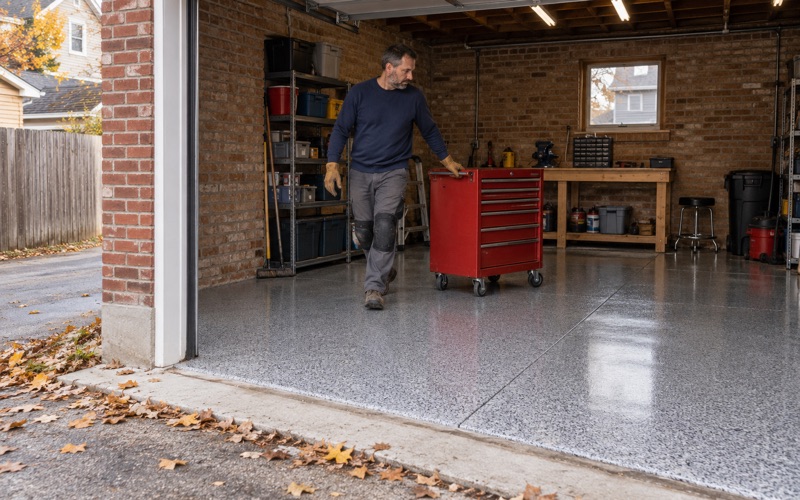
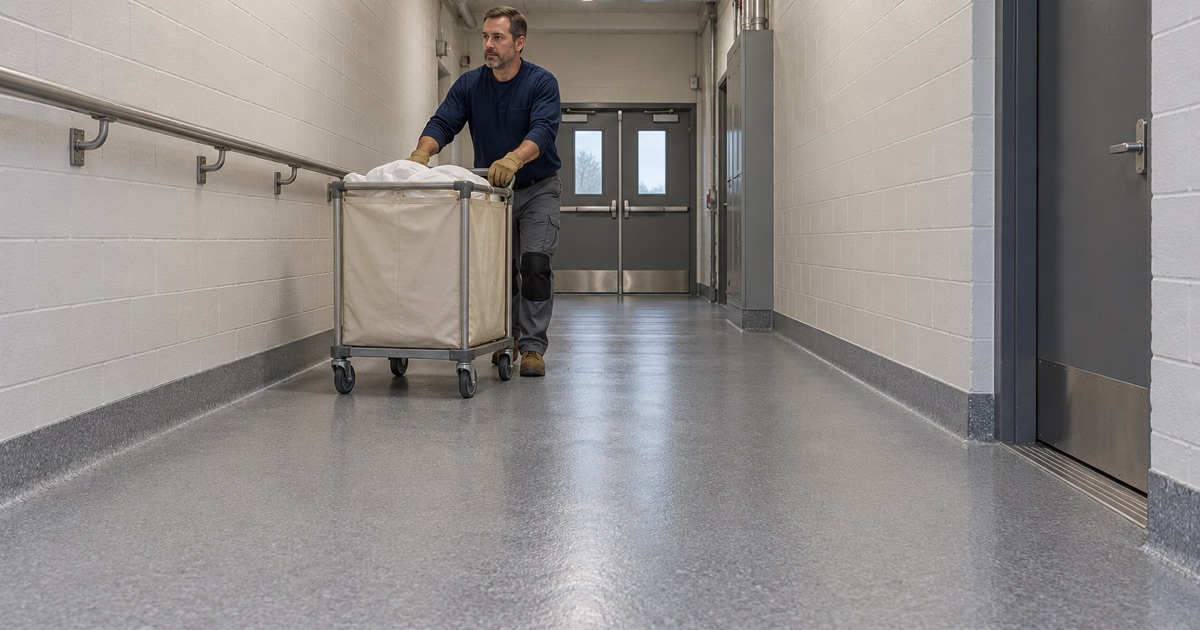
Housekeeping carts are heavy, loaded and pushed on small hard wheels, often along the same line down a corridor shift after shift. Linen bins and laundry carts follow the same paths. A narrow wheel concentrates the load, and a thin film coating will show a worn lane long before the rest of the floor looks tired.
For those lanes we lean toward a 100% solids epoxy body coat with a quartz aggregate broadcast, locked in with a polyaspartic or polyurea topcoat. Quartz gives the surface grip that holds when the floor is wet, and the broadcast adds body where the wheels concentrate.
Not every room needs the heaviest build. A dry linen storage room with light shelving traffic may be well served by a thinner epoxy system, and we say so rather than quoting the same build everywhere.
Water, Detergent and Heat in the Laundry
A hotel laundry puts water on the floor and keeps it there: drips from washers, condensation, wet carts rolling out of the room and floor drains that see constant use. Detergents and cleaning chemicals end up on the concrete as well, and the room is warm and humid for most of the day.
That combination is where we would look hard at urethane cement rather than a standard epoxy system. Urethane cement tolerates heat, moisture and chemical exposure better, and it can be coved up the wall so water has no open joint at the base to work into.
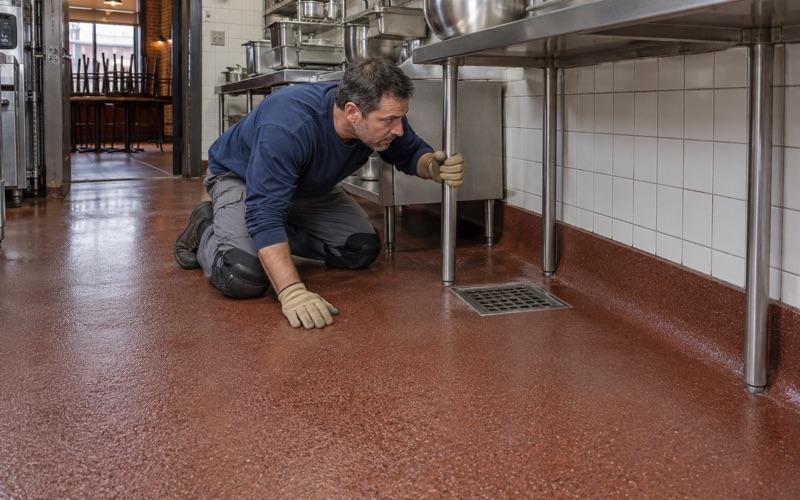
Drains get their own detail. We terminate the coating at the drain body and seal the transition, because a floor that is sound everywhere except the ring around the drain will fail from that ring outward.
Slip resistance is set by the broadcast and the topcoat together. We size the aggregate to the room, coarser where water stands and finer in a dry linen room where carts need to roll easily.
Service Corridors and the Loading Area
Service corridors connect it all, so they carry carts, foot traffic and deliveries in one narrow lane. Near the loading area, pallet jacks and hand trucks add point loads and impact at the dock edge and the door thresholds.
Thresholds and transitions are where coatings usually start to lift. We grind them flush, fill chips and spalls before coating, and carry the system cleanly to the edge rather than feathering it out thin.
A Building That Never Closes Gets Its Floor in Sections
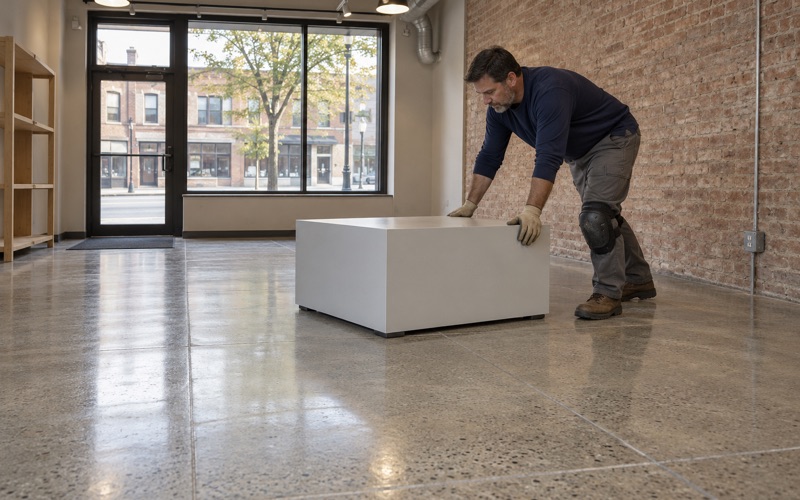
A hotel cannot shut its laundry for a week while a floor goes down. Linen has to be washed, rooms have to be turned and deliveries still arrive, so back-of-house floor work is planned one section at a time while the rest of the building keeps running.
We already schedule commercial floors around the hours a building has to stay open, including overnight and weekend windows. In a hotel that usually means splitting a corridor down its length, phasing a laundry room bay by bay, or working the loading area in the quietest delivery window.
Planning the Sequence
Before we quote, we walk the back-of-house routes with whoever runs housekeeping and maintenance. The questions are practical: which doors must stay passable, where carts can detour, when the washers can be shut down and how long a section can stay closed.
The answers shape the system as much as the schedule does. A fast-curing polyaspartic topcoat can return a corridor to cart traffic sooner, while a urethane cement laundry floor may need its own window and a planned reroute.
Each section is scoped as its own job inside the proposal, with its own square footage, system and return-to-service time. That way the hotel can approve the phases one at a time and see that each one matches what was quoted.
Dust, Odor and the Seam Between Sections
Grinding in an occupied building has to be clean. We run diamond grinders and shot blasters with dust collection, contain each work zone and keep the debris out of the drains.
Every phase leaves a joint where it meets the next one. We place those seams at doorways or at existing control joints where we can, and we grind and prime the edge of the cured section so the next pour bonds to it rather than sitting on top.
Cure timing follows the slab, not the clock. We check slab temperature and the dew point spread at the surface before each phase, because a damp, humid laundry is where amine blush is most likely on a fresh epoxy coat.
Returning a Section to Service
Foot traffic and cart traffic are different milestones. A corridor may take light foot traffic well before it can take a loaded linen cart, and we mark both times on the schedule so staff are not guessing.
We also walk the finished section with the maintenance lead before it reopens. A thin spot, a pinhole or a rough seam is far easier to fix while the area is still closed than after a full shift of carts has rolled over it.
What a 1986 Building’s Floors Have Already Been Through
A hotel built in 1986 and renovated in 2006 has floors with history. Back-of-house concrete in a building that age has often been patched, painted, sealed or tiled more than once, and the renovation may have added another layer on top.
Reading the Old Coating and the Cracks
We look at what is already down before we quote. Old paint, failed coatings, sealers and tile adhesive all have to come off, and grinding through them tells us whether the concrete underneath can take a new system.
The 2006 renovation is worth asking about. Any records of what was put on the back-of-house floors then, and what was patched since, help us predict what the grinder will find.
Cracks get the same reading. A hairline shrinkage crack can be routed and filled, but a crack that moves, or a slab that has settled or broken up near a drain, needs repair first, and we say so plainly rather than coating over it. The target is a measured ICRI CSP profile on sound concrete.
Moisture Testing on a Slab That Sees Daily Water
A laundry floor that has been mopped and dripped on every day can hold more moisture than its surface suggests. We test before choosing a system, with ASTM F2170 in-situ relative humidity probes or an ASTM F1869 calcium chloride test, and the ASTM D4263 plastic sheet test as a quick first look.
If the readings run high, a moisture-mitigation primer goes into the build and into the written scope. A slab that tests too wet for any primer is one we tell you about before the job is sold, not after a blister appears.
Garages and Basements in Wood Dale
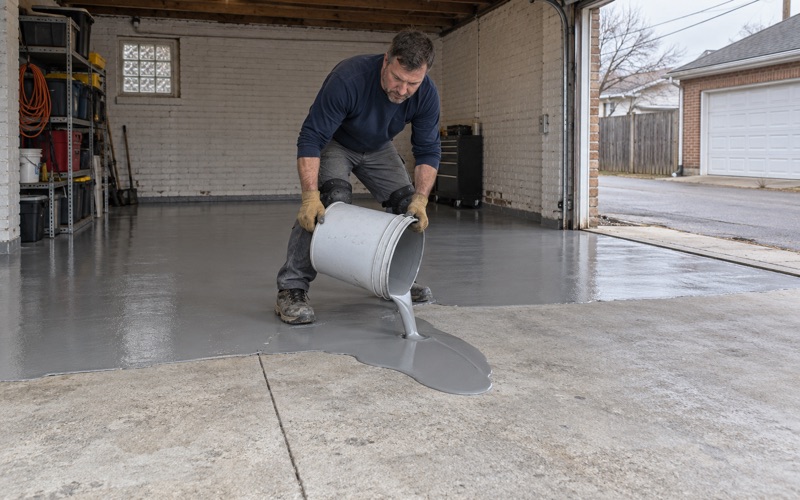
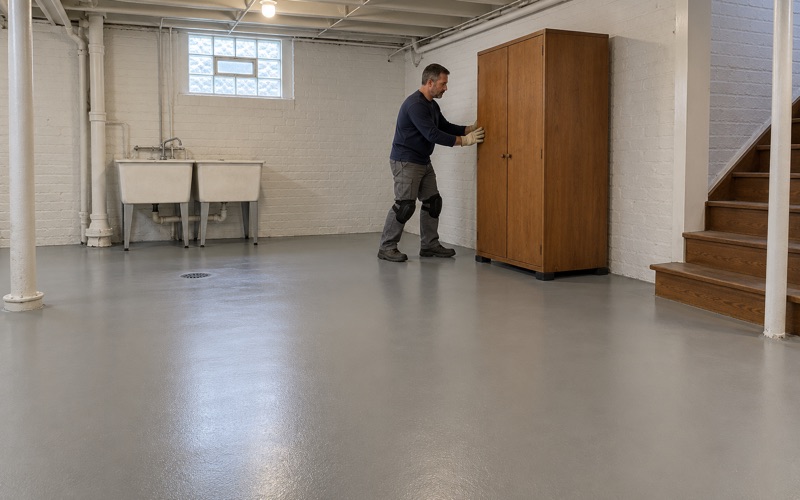
Homeowners get the same process on a smaller scale. Grinding, moisture testing and an honest read of the old floor come first whether the room is a hotel laundry or a two-car garage, and every home job gets a written contract plus the state’s Home Repair: Know Your Consumer Rights pamphlet before work starts, as the Illinois Home Repair and Remodeling Act requires.
Whether the floor carries housekeeping carts or a family car, the quote tells you what is going down, how thick it will be and what could keep it from lasting. Then we schedule it around the people who still need the room.
- 20+ Years Coating Floors
- Moisture Tested Before Quoting
- Free Written Estimates