
Berwyn Epoxy Flooring installs polyaspartic floor coating systems in Berwyn, IL, serving surrounding cities including Forest Park, Lyons, Brookfield, River Forest and Summit. Over 20+ years we have watched polyaspartics go from a specialty product to the topcoat we reach for on most garage floors, because they cure fast, stay clear in sunlight and stand up to winter salt.
A fast coating is still only as good as the slab it is bonded to. Every polyaspartic job we do starts with diamond grinding or shot blasting and a moisture test, and the proposal names the products in each layer and the finished thickness, so the speed of the install never stands in for preparation.
We will also tell you when polyaspartic is not the right choice. A damp basement slab, a floor that needs a thick build to level it, or a kitchen with hot washdown can each call for a different system, and the recommendation comes from the slab rather than from the product we happen to sell most.
What Polyaspartic Is and Why It Is Used
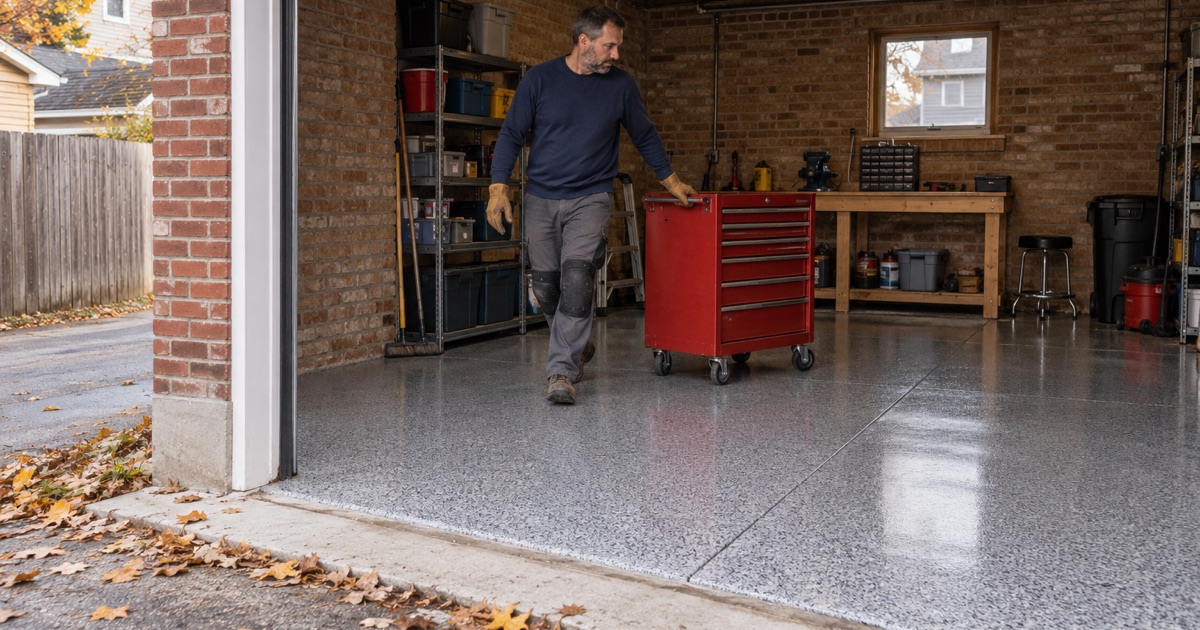
A Fast-Curing Aliphatic Coating
Polyaspartic is a member of the polyurea family, formulated so it can be rolled and squeegeed rather than sprayed. It cures by chemical reaction in a fraction of the time a standard epoxy takes, which is where its reputation for one-day floors comes from.
Because it is aliphatic, it holds its color and clarity under ultraviolet light. That is the property that makes it the go-to clear topcoat over flake and quartz floors that get afternoon sun through a garage door.
Short Working Time, Skilled Crews
The same fast cure that makes polyaspartic attractive also gives it a short working time in the pail and on the floor. Mixed material has to be spread, back-rolled and finished before it starts to set, which leaves no room for hesitation.
Our crews mix in small batches, plan each pull across the floor in advance, and keep a wet edge moving. Rushed or oversize batches are what produce roller marks, bubbles and dry spots on a polyaspartic floor.
Wider Temperature Window Than Epoxy
Polyaspartics can generally be applied on cooler slabs than standard epoxies, which helps in a Chicago-area spring and fall. That does not erase the rules: the slab still has to be warmer than the dew point by a safe margin, or moisture can condense on the surface and cloud the coating.
We measure slab temperature and dew point spread with a surface thermometer and a hygrometer before every coat. An unheated alley garage in deep winter can still be too cold, and in that case we schedule for spring.
Where Polyaspartic Floors Make Sense
Garage Floors That Fight Road Salt
Road salt and calcium chloride brine sit on a garage floor for months each winter. A polyaspartic topcoat resists that salt film and the gasoline and oil drips that come with it, and its hardness helps it resist hot tire pickup.
On most garages we install a 100% solids epoxy or a polyaspartic base, a full vinyl flake broadcast, and a clear polyaspartic topcoat. The result is a floor that sheds salt water to the door and wipes clean in a thaw.
Basements, Workshops and Hobby Rooms
In a basement, a polyaspartic topcoat adds a tough, cleanable surface over a laundry room, workshop or home gym. It can go down in a day on a dry slab, which keeps the house usable during the job.
The moisture test matters more here than in a garage. Basement slabs sit in damp soil, and if the reading is high we use a moisture-mitigation primer under the system rather than relying on any topcoat to hold back vapor.
Commercial Spaces That Cannot Close Long
For a shop bay, clinic back room or retail stockroom, the short cure is the main attraction. A section can be ground and coated overnight or over a weekend and returned to service on schedule.
We phase larger floors so part of the building stays open while another part cures. That planning is written into the proposal, along with the times each area will be off limits.
Building the System Layer by Layer
Grinding and Crack Repair Come First
Polyaspartic penetrates and bonds best to a freshly ground surface. We grind to the profile the manufacturer calls for, then fill cracks and spalls with a fast-setting repair material that can be ground flush the same day.
Acid etching is never part of our process. It leaves residue, it cannot remove sealers or paint, and it produces an uneven profile that shows up as weak spots once a car starts rolling over the floor.
Base Coat Choices Under Polyaspartic
Some systems use polyaspartic for every layer, while others put an epoxy base underneath. An epoxy base wets into concrete slowly and builds thickness economically, and a full polyaspartic system cures fastest from start to finish.
Which one you get depends on how fast the floor has to return to service, the moisture reading, and the finish you want. The proposal names the base and the topcoat by product so you can see the build.
Flake, Quartz and Clear Finishes
Vinyl flake broadcast into the base coat gives the familiar speckled garage floor. Quartz broadcast gives a textured, highly slip-resistant surface for ramps and wet areas, and a clear polyaspartic over a stained or polished slab keeps the look of concrete.
Whatever is underneath, the polyaspartic clear coat is what you walk and drive on. We apply it at the thickness the manufacturer specifies and add an anti-slip additive where the floor will be wet.
Price, Warranty and the Rules Around Polyaspartic
What Moves the Price of a Polyaspartic Floor
Polyaspartic resins cost more per gallon than most epoxies, so a full polyaspartic system usually prices above an epoxy base with a polyaspartic topcoat. The larger swings, though, come from the slab: paint and sealer removal, crack and spall repair, and a moisture-mitigation primer when the test calls for one.
The finish adds its own range. A solid color with a clear coat uses the least material, and a full flake or quartz broadcast adds media, labor and an extra scraping pass. Every one of those choices is a separate line in the proposal, so you can see what each decision costs.
Warranty Exclusions We Read Out
Polyaspartic warranties exclude the same leading cause of failure that epoxy warranties do: moisture vapor pushing up through the slab. They also typically exclude damage from structural cracking, from chemicals left standing on the floor, and from gouging by steel jack stands or shovel edges.
We go through the exclusion list with you before you sign, with moisture named first. If your slab tested near the limit, we explain what the mitigation primer does and what the warranty will and will not cover as a result.
Illinois VOC Limits on Floor Coatings
The Chicago area sits in an ozone nonattainment area, and Illinois caps the VOC content of architectural and industrial maintenance coatings under 35 Ill. Adm. Code Part 223 Subpart C, alongside the federal rule at 40 CFR 59 Subpart D. The state limit applies to the contractor who applies a coating, not only to the company that makes it.
That means a product that is legal to sell somewhere else is not automatically legal to roll onto a floor here. We select compliant polyaspartic and epoxy products for every job and keep the product data on file.
Our Step-by-Step Polyaspartic Floor Coating Process
Step 1: Slab Reading and Proposal
We map cracks and old coatings, take a moisture reading, and note slab temperature. The proposal lists each product, the coat count, the finished thickness and whether the job can finish in one day.
Step 2: Grind, Vacuum and Repair
The floor is ground with dust extraction, repaired, and vacuumed clean. Nothing is washed down a drain or out into the alley.
Step 3: Base Coat and Broadcast
The base coat goes down within the measured temperature and dew point window, and flake or quartz is broadcast to refusal while it is wet. Material is mixed in small batches so each pull across the floor is finished well inside the working time.
Step 4: Clear Topcoat and Hand-Off
Loose broadcast is scraped and removed, the polyaspartic topcoat is applied, and you get written times for foot traffic, parking and moving items back in. The warranty terms and exclusions we went over at the estimate are attached to that hand-off sheet.
- 20+ Years Coating Floors
- Moisture Tested Before Quoting
- Free Written Estimates