Berwyn Epoxy Flooring brings more than 20 years of work to epoxy flooring in Northlake, and the commercial calls from this city keep circling one problem: a single slab asked to do two jobs at once. Equipment wants a floor that shrugs off hard wheels, dropped pallets and tight turns. People on foot want a floor they can push a loaded cart across in wet boots without giving it a thought.
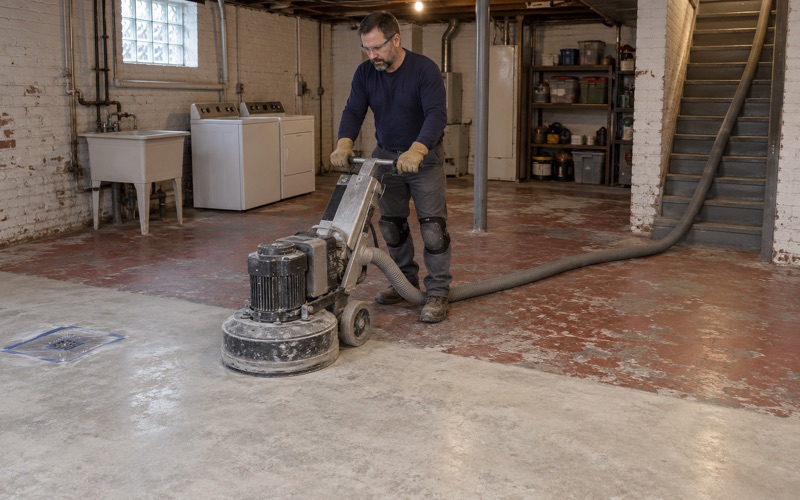
We start every one of those floors the same way. The slab is opened mechanically with a diamond grinder or a shot blaster to a measured surface profile, never acid etched, and the written proposal names the product, the system build and the finished thickness. A facilities manager can hold the quote up against what went down and check it line by line.
Before a number goes on paper, we read the cracks, the joints and whatever coating is already on the concrete. When a slab needs repair or replacement before it can carry a new system, the proposal says so plainly instead of leaving it for the first season of traffic to reveal.
Big Boxes on the City’s Own List, and Mixed Traffic on One Slab
The City of Northlake’s business page reads like a map of who uses floors hard in this town. Walmart, Home Depot and Sam’s Club appear on it next to manufacturers and carriers such as Scholle and Champion Transportation. Those three retail names are places on that list, not clients of ours, but they describe a kind of building that is common here and in every corridor like it: the big-box or warehouse-club floor.
Forklifts and Shopping Carts on the Same Floor
In that format the stockroom and the sales floor are not separate buildings. Forklifts and pallet jacks restock tall racking during open hours or just before them, and the same aisles then carry shopping carts, strollers, flatbed carts and shoppers who are reading shelf tags rather than watching the floor. One slab takes polyurethane and nylon wheels under heavy point loads, then soft rubber cart casters and street shoes an hour later.
That is a different brief from a warehouse where only trained drivers walk, and a different brief from a showroom that never sees a pallet. A coating chosen for one half of the traffic usually fails the other half. A smooth, glossy decorative finish can look right on opening day and turn into a scuffed, slick surface by the next inventory count, while a coarse industrial texture can wear out cart wheels and look out of place where customers shop.
Where Northlake Sits for Permits and Paperwork
Northlake straddles Leyden Township and Proviso Township in western Cook County, and its name comes from North Avenue and Lake Street, which meet on the city’s west border. For a commercial floor, the practical point is who signs off. The City of Northlake registers every contractor and subcontractor: a $100 annual license good for one year from issuance, a $10,000 bond and a certificate of insurance naming the city. Illinois issues no state license for coatings work, so we confirm that registration before a Northlake job goes on the calendar.
Looking for epoxy-flooring closer to Franklin Park? See Epoxy-Flooring in Franklin Park.
Grip for Shoppers, Wear for Equipment
The hard part of a mixed-traffic floor is that slip resistance and abrasion resistance pull the design in opposite directions. More texture gives a shoe something to bite on, and it also gives a hard wheel more peaks to grind down and a mop more to drag across. We do not quote a slip rating for any system, because none is sourced for the products we install, and no floor coating is a guarantee against a fall. What we can do is choose texture deliberately, zone by zone, and explain what each choice trades away.
Building Texture Into the System
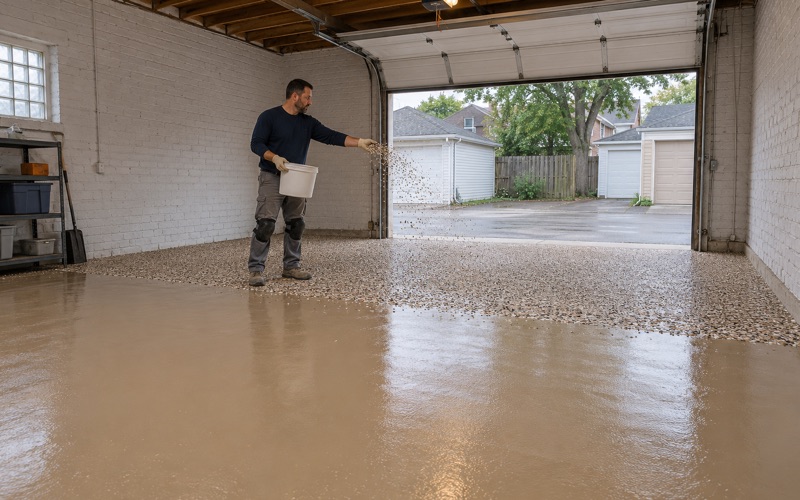
On a sales floor that sees carts and equipment, a common build is a 100% solids epoxy body coat with a quartz aggregate broadcast, backrolled and sealed with a polyaspartic or polyurea topcoat. The size of the aggregate and the number of topcoats set how aggressive the finish feels underfoot. A finer broadcast reads almost smooth to a shopper, and a coarser one belongs in a wet entry, a loading apron or the ramp up from receiving.
A vinyl flake broadcast is a fine choice in a break room or an office corridor. In a forklift aisle it is the wrong product, because the flake sits near the surface and the wheel finds it first. Where a store would rather keep bare concrete, a ground and polished slab with a lithium silicate densifier is a real option for the sales floor, and we say so when it fits better than a coating.
Topcoats That Take a Wheel
The topcoat is what the traffic actually touches, so it carries most of the wear budget. Polyaspartic and polyurea topcoats hold up well to scuffing and resist the yellowing that sunlit entries bring out in plain epoxy. Where a floor sees washdown, heat or chemical spills, urethane cement is the tougher body, and the texture is built into that layer rather than added on top.
Cure conditions matter as much as product choice. We schedule curing against slab temperature and the dew point spread at the slab surface, not the calendar, because a topcoat laid over a cold, damp slab can develop amine blush and lose its bond to the next coat. A retail floor that has to reopen Monday morning gets a schedule built around those readings, with the timeline written into the proposal.
Joints, Tire Marks and the Drive Aisle
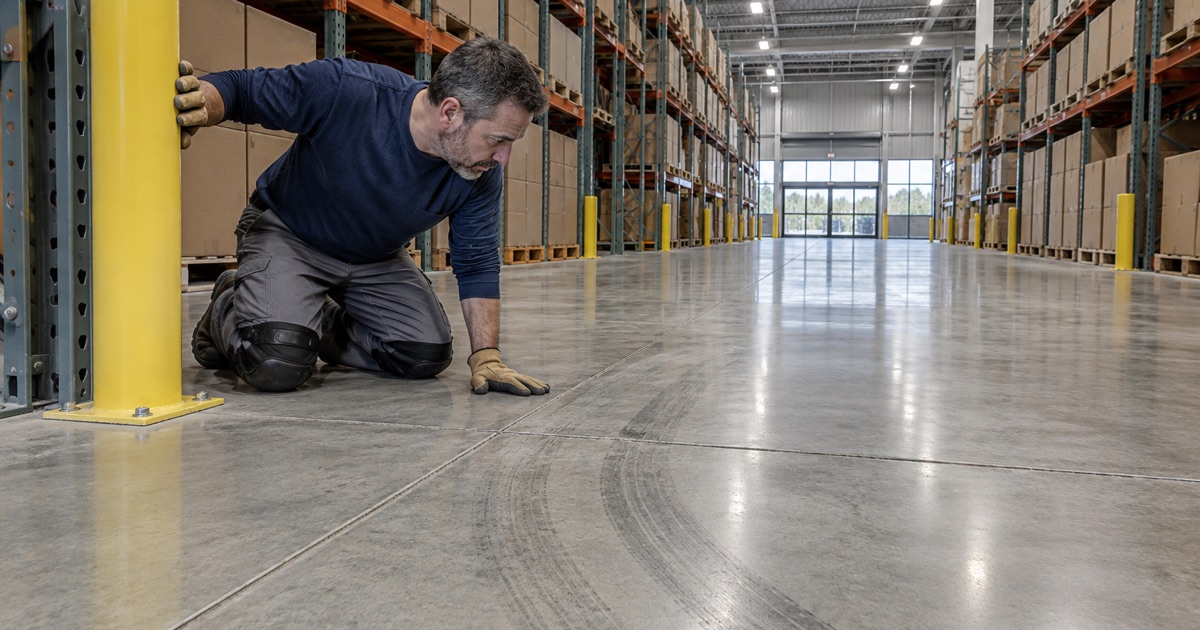
Wide-aisle retail floors are cut into large panels, and those saw cuts are where equipment traffic does its damage first. A hard forklift wheel striking an open joint chips both edges, the chip grows into a spall, and before long every pallet jack drops into the gap with a bang. A coating laid straight over a damaged joint simply reproduces the damage in a new color.
Rebuilding Joint Edges Before Coating
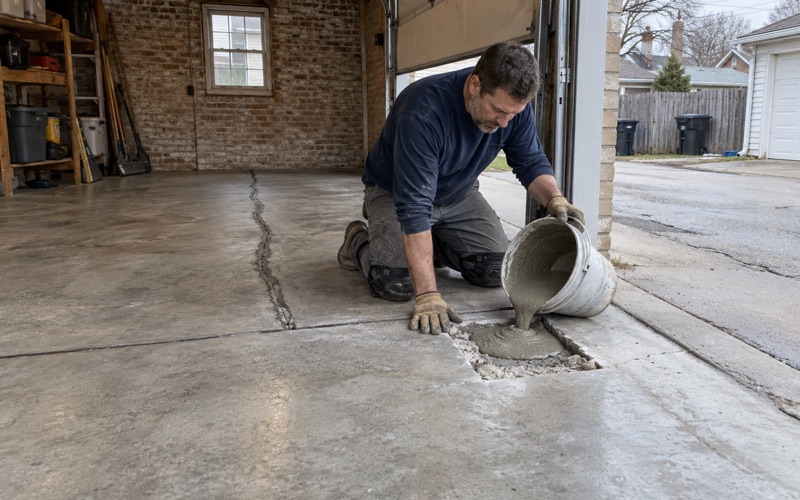
We grind out spalled edges, rebuild them with a repair mortar, and fill the joints with a semi-rigid filler that supports a wheel crossing the cut. Moving joints are honored rather than coated over, since a slab that moves will crack any film bridged across it. Cracks get read before they get filled: a hairline from shrinkage is a different job from a crack that rocks under load, and the second one is a slab repair before it is a coating job.
Tire Marking and Hot Tire Pickup
Tire marking is the complaint that shows first on a busy aisle. Black streaks from equipment tires and the dark arc where a pallet jack pivots are partly a cleaning question and partly a topcoat question, and a harder, more chemical-resistant finish releases marks with a scrubber instead of holding them. Where vehicles come in from the street, hot tire pickup is the related risk, and we lay out which systems stand up to it and which do not.
The drive aisle itself deserves its own plan. Where forklifts run a fixed path between receiving and the racking, we can mark that lane in a contrasting color or a heavier build so drivers and shoppers both read where equipment travels. Striping laid into the topcoat lasts far longer than tape or paint rolled onto a finished floor, and it wears with the system rather than peeling off it.
Moisture Under a Large Slab
A big floor rarely dries evenly. Moisture testing is a written line item in our scope, using ASTM F1869 calcium chloride tests or ASTM F2170 in-situ relative humidity probes, compared against the thresholds the coating manufacturer publishes. If readings come back high, a moisture-mitigation primer goes into the build and into the price before the job is sold, and our warranty exclusions are read out with moisture named first.
Receiving, Returns and the Garden Center
The sales floor gets the attention, but the hardest-working concrete in a big box is often behind it. Receiving takes the heaviest loads and the most turning. Returns and staging areas collect pallets, carts and damaged goods in one tight space. A seasonal garden center adds water, soil, fertilizer and bagged material dragged across the floor all spring.
Matching the System to Each Zone
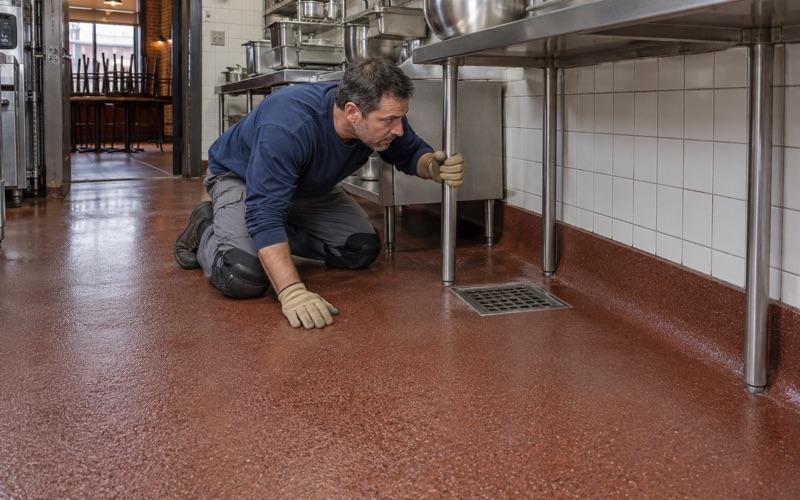
We rarely recommend one system for the whole building. A receiving dock might get a thicker urethane cement or a heavier epoxy build with a coarser aggregate, while the returns counter gets a finer texture that customers walk across. A garden center that is hosed down daily needs a finish that tolerates standing water and a broadcast that stays grippy when wet, and a drain detail that keeps water moving off the floor.
The dock edge is its own small job. Where dock plates and trailers meet the slab, concrete takes impact as well as abrasion, and a thin film there chips within weeks. We build that edge thicker, taper the coating so a pallet jack rolls onto it without catching, and plan for the edge to be the first area touched up at a maintenance visit.
Every product we use is chosen within the Illinois limit on VOC content for floor coatings, a rule that binds the installer as well as the manufacturer. Grinding dust is collected at the machine with vacuum extraction, which matters when a sales floor next door is open to shoppers.
Working Around Store Hours
A store that sells seven days a week cannot close an aisle for a week. We phase the work section by section and schedule it around the hours the building has to keep running, including overnight and weekend windows, so equipment and customers are kept apart from wet coating. Each phase is handed back only once it has cured enough for the traffic it will carry.
Fire-Code Questions Go to the District
Fire protection in Northlake is not a city department. The Northlake Fire Protection District runs one station at 118 Parkview Drive, so a commercial question about fire lanes, egress aisles or flammable product storage near a coating job goes to the district rather than to City Hall. We flag those questions early, alongside the city registration, so the paperwork is settled before the first grinder arrives on site.
- 20+ Years Coating Floors
- Moisture Tested Before Quoting
- Free Written Estimates