Berwyn Epoxy Flooring brings more than 20 years of epoxy-flooring work to Lemont, and the first thing we ask on any call here is what the floor actually has to survive. A two-car garage, a restaurant kitchen and a room full of fermenting tanks are three different problems, and a coating that suits one can fail quickly on another. We start from that question rather than from a color chart.
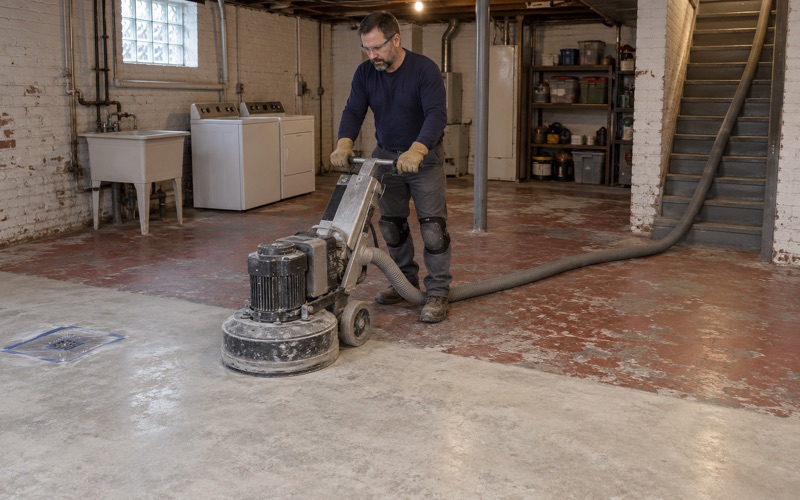
Every slab we coat is opened mechanically, by diamond grinding or shot blasting, to a measured ICRI CSP profile. We do not acid etch, because etching leaves residue and an uneven profile that no primer fully forgives. Moisture testing sits in the written scope as its own line, whether the slab is under a garage or a commercial floor, so a vapor problem is found before the coating goes down rather than after it blisters.
Our proposals name the product, the system build and the finished thickness in writing, which lets you hold the finished floor against the quote layer by layer. When a slab needs repair or replacement before anything can be coated, we say so before pricing a coating that would not last.
A Production Brewery on Talcott Avenue
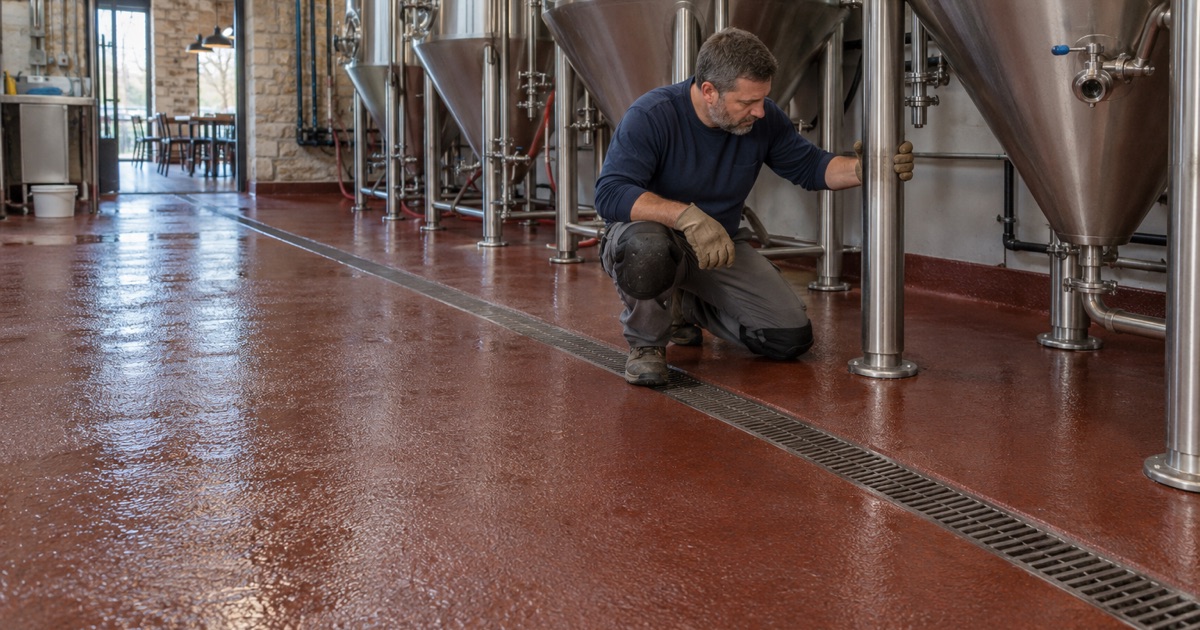
Lemont has something most suburbs its size do not: a working production brewery downtown. Pollyanna Brewing opened its tasting room at 431 Talcott Avenue on September 26, 2014, with the brewhouse visible from the bar, and it has brewed on site since then. The business, now Pollyanna Brewing & Distillery, was still Lemont-based in July 2026. We have not worked on or seen that floor, and we mention it only because it shows what a production floor in this village has to handle.
Hot Water, Caustic and Acid
A brewhouse floor takes punishment a garage never sees. Hot water and hot wort spill during transfers, and the cleaning cycle runs caustic and acid washdown across the same concrete day after day. Sugars dry into sticky films, and the floor is hosed toward the drains constantly. Seasonal lagers, barrel-aging and wild-yeast programs each bring their own spills and cleanup routines.
Spent grain, hop residue and yeast slurry add organic acids to that mix, and they tend to collect where hoses are dropped and carts turn. Every one of those spots is also a slip hazard when wet, so the floor has to stay textured enough to walk on after years of scrubbing. A coating that loses its texture in the first season is a coating that will need replacing early.
Thermal Shock
The hardest load is sudden temperature change. A slab chilled under a cold cellar can be hit with near-boiling water in seconds, and the coating moves at a different rate than the concrete beneath it. Thin, rigid coatings crack or lose their bond along that line first, usually around drains and tank legs where the hot water lands. That is why we treat any brewery, distillery or taproom production floor as its own category, separate from decorative work.
Looking for epoxy-flooring closer to Forest Park? See Epoxy-Flooring in Forest Park.
Urethane Cement Versus Garage-Grade Epoxy
Why Thin Decorative Epoxy Falls Short
The thin epoxy kits and flake floors sold for garages are built for tire traffic, oil drips and a few cleanings a year. Under caustic washdown and repeated thermal shock they are generally a poor match, and the failures tend to show up as soft spots, delamination and staining near the wet zones. A good-looking garage system is not a cheaper version of a production floor; it is a different tool for a different job.
Urethane Cement and Heavy Chemical-Resistant Systems
For production floors the usual specification is urethane cement, troweled far thicker than a garage coating, or a heavy chemical-resistant resin system built with aggregate. Urethane cement tolerates the expansion and contraction of hot washdown far better than rigid epoxy does. We set aggregate into the surface for slip resistance where wet floors and foot traffic meet. The proposal still names the exact product and finished thickness, so you can check the result against the quote.
Preparation on a production floor goes deeper than in a garage. Years of washdown can drive sugars, cleaners and oils into the top of the slab, so we shot blast or grind until we reach sound, clean concrete, and the profile we aim for is coarser than a thin coating needs. Readings for moisture still go into the scope, because a floor that is hosed daily is rarely a dry one.
Drains, Slopes and Wet Cleaning
On a production floor the details at the edges decide how long it lasts. Trench-drain edges and floor-drain bodies need the coating anchored into keyed terminations, so water cannot creep under the system where it ends. Slope-to-drain matters as much as the material, because low spots hold chemical-laden water and let it sit on the coating for hours. Where the existing slope is wrong, we say so and price the correction before a single coat is mixed.
Coves at the wall junction keep washdown water from soaking the base of the walls, and we build them in the same system as the floor. Production floors also cannot sit idle for days. We schedule the work around brewing and service hours, including overnight and weekend windows, and plan the cure against slab temperature and dew point rather than the clock.
Shops and Restaurants in Lemont’s Limestone Downtown
The Lemont Downtown Historic District was listed on the National Register in 2016, and its 38 buildings date from the quarrying era and have stayed in continuous use since the 19th century. Lemont-Joliet limestone, sometimes called Athens marble, faced the Chicago Water Tower, and the Old Stone Church was built of limestone in 1861. The stone outside has lasted; the floors inside are another matter.
A Century of Patches
Commercial and basement floors downtown sit under buildings with a century of patches and changes. We expect old paint, patching compounds, adhesive from earlier flooring and slabs poured in sections at different times. Before choosing a system, we test what is already there and read the cracks, because a coating bonded to a failing old layer fails along with it.
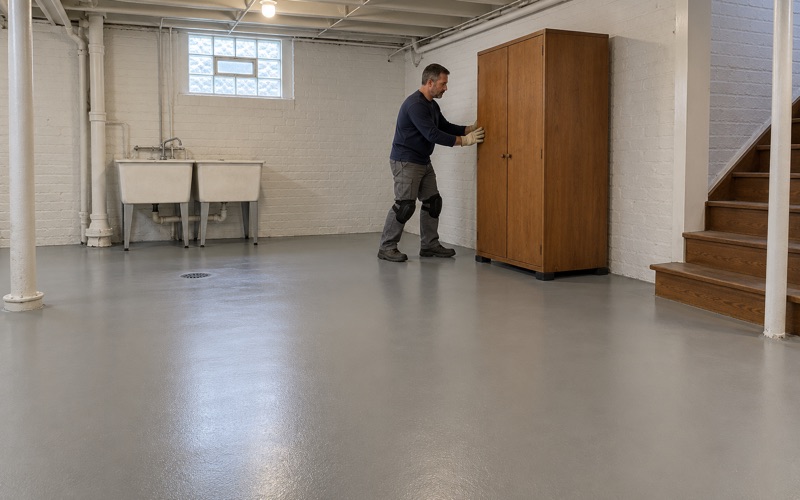
Basements under the older storefronts deserve the same caution. A slab poured decades after the building went up may meet the walls at an uneven, damp joint, and old floors sometimes hide efflorescence under paint. We open a test area, check moisture and bond, and tell you plainly whether the floor can take a coating or needs repair first.
Restaurants and Taprooms
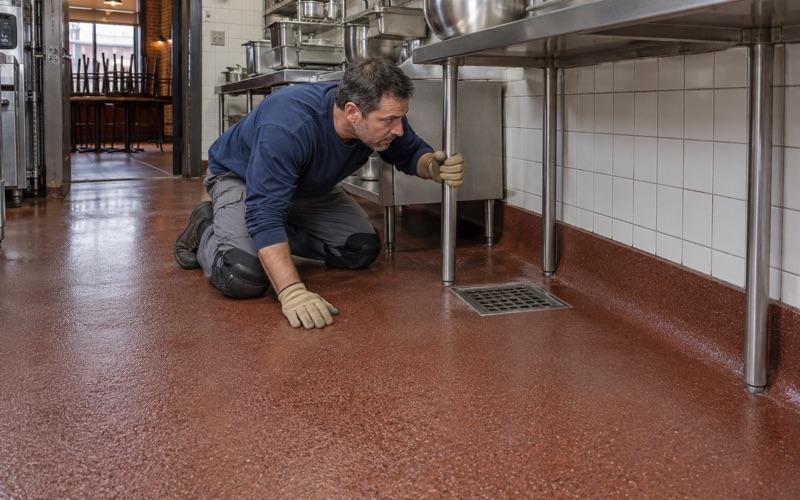
Kitchens and bar back areas see grease, hot water and frequent mopping, which pushes them toward the same chemical-resistant thinking as a brewhouse at a smaller scale. Quartz aggregate broadcast or textured urethane cement are common answers where staff walk on wet floors all shift. We plan the work around opening hours so a restaurant is not closed longer than the cure requires.
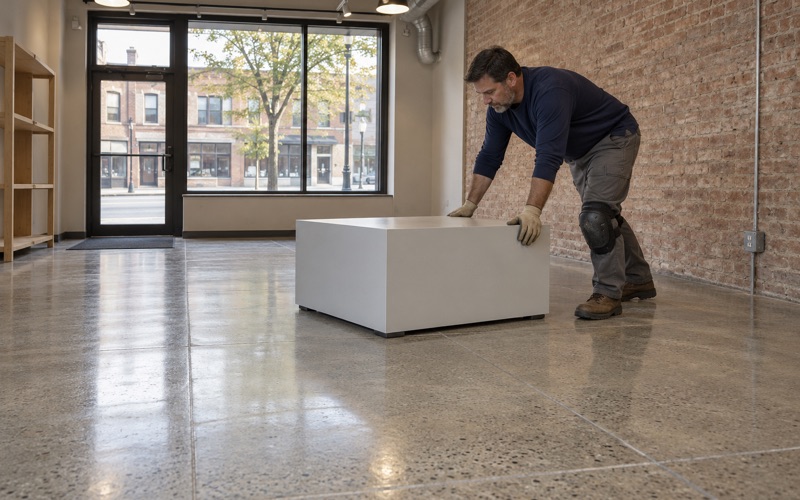
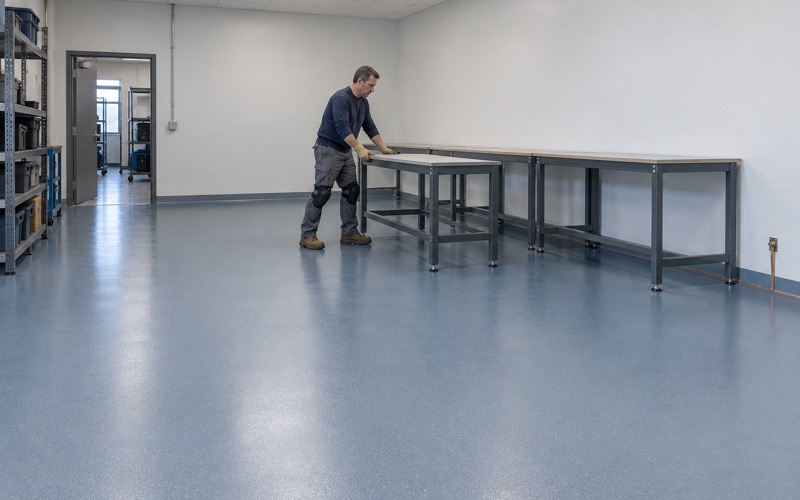
Shops and offices along the downtown streets have lighter needs. A retail floor may suit a thin-film epoxy with a clear topcoat, or a ground and densified concrete finish with lithium silicate where the existing slab is sound. We match the system to the traffic instead of selling the heaviest option to every storefront.
Who Signs Off
The Village of Lemont Building Department administers the building code, which has the 2021 I-codes adopted. Illinois issues no state license for flooring or coatings work, and the village’s contractor registration terms were not available to us. We confirm registration, bond and insurance requirements with the Building Department before a downtown job is scheduled.
Garage Floors in Lemont’s 1990s-2010s Neighborhoods
Most Lemont homes are far newer than the downtown. Of the village’s housing, 63.0 percent was built since 1990, and about 1,000 units are single-family attached townhomes. The typical garage floor here is a 1990s-2010s slab rather than a prewar one, and that changes what the work involves.
Coating a Younger Slab for the First Time
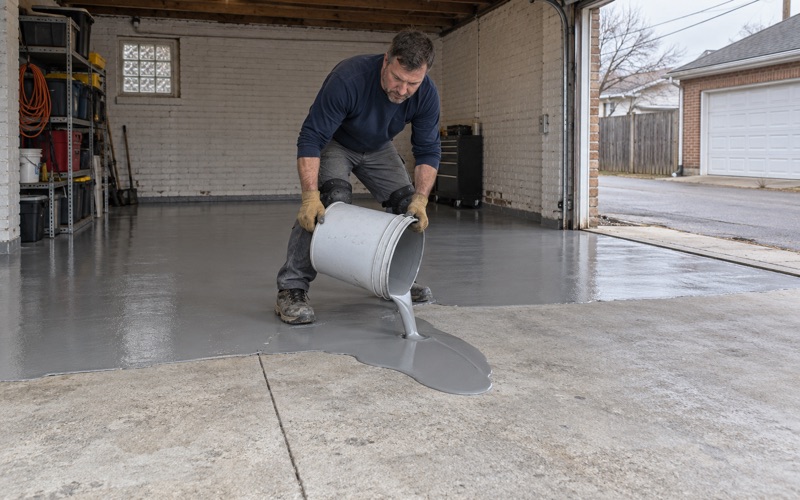
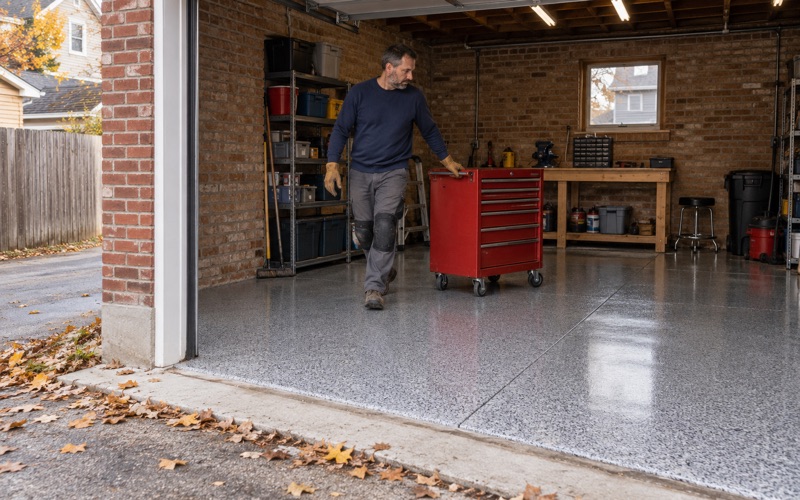
Many of these garages have never been coated. A younger slab often carries a curing compound or sealer from construction, along with tire marks and oil, and all of it has to come off. We grind to an open profile, fill cracks and control joints, and build with 100% solids epoxy under a polyaspartic topcoat, with vinyl flake broadcast if you want texture and color. Hot tire pickup, where a softened coating lifts under warm tires, is mostly a prep and product problem that grinding and the right primer prevent.
Moisture Before Color
A newer slab is not automatically a dry one. We test with ASTM F2170 in-situ relative humidity probes or ASTM F1869 calcium chloride testing before committing to a system, and a moisture-mitigation primer goes into the scope when the readings call for one. Warranty exclusions are explained before you sign, with moisture named first.
Curing on the Slab’s Schedule
Coatings cure on chemistry, not on the calendar. We read slab temperature and the dew point spread at the slab surface before each coat, because a cold slab near the dew point can leave amine blush on epoxy and weaken the bond to the next layer. An unheated garage in a cold stretch may have to wait for warmer conditions, and we say so plainly rather than rushing a coat onto a slab that is not ready.
Townhome Logistics and Paperwork
Attached garages in a townhome row can mean shared walls and neighbors close by. If you belong to a homeowners association, its rules on work hours and parking are worth checking before we book a date. We contain grinding dust with vacuum collection and keep the work inside your bay. Every home job gets a written contract and the Home Repair: Know Your Consumer Rights pamphlet before work starts, as the Illinois Home Repair and Remodeling Act requires.
- 20+ Years Coating Floors
- Moisture Tested Before Quoting
- Free Written Estimates