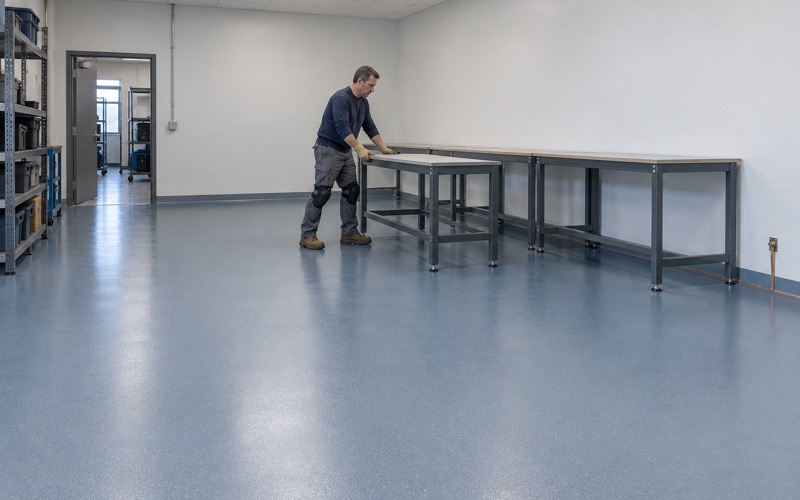
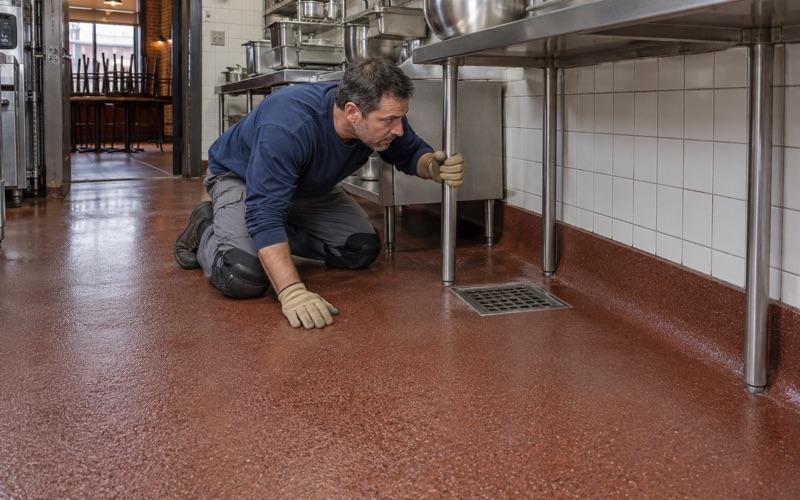
Berwyn Epoxy Flooring has spent more than 20 years installing epoxy flooring in La Grange Park basements, garages and working floors, and the first question we ask about a basement here is where the water comes from. In this village the answer is usually the floor drain. That changes how we lay out a coating, where it stops, and what we tell an owner it can and cannot do.
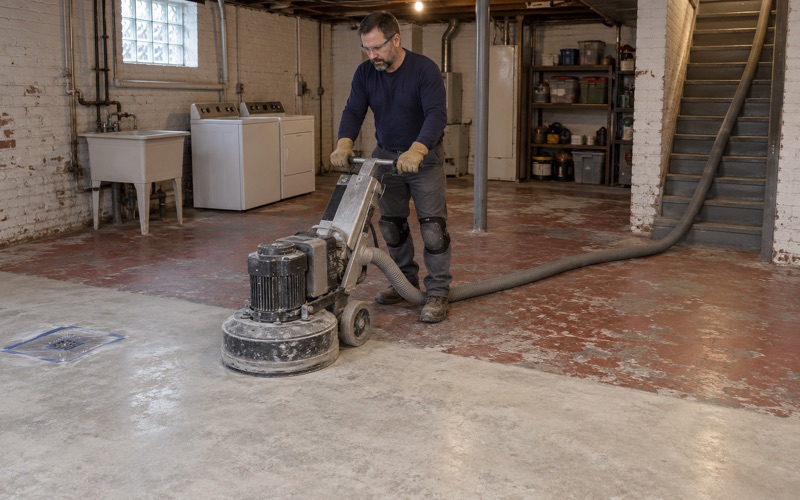
Every system we install starts the same way. The slab is opened with a diamond grinder or a shot blaster, never with acid, and moisture testing is written into the scope as its own line. The proposal names the product, the build and the finished thickness, so an owner can hold the finished floor up against the paper.
We also say one thing early, before any color chart comes out. A floor coating does not stop a sewer backup, and we will not sell one as if it did. What it can do is give a basement a floor that cleans up faster and holds up better when water does arrive.
Ninety Percent Combined, and Where It Shows Up First
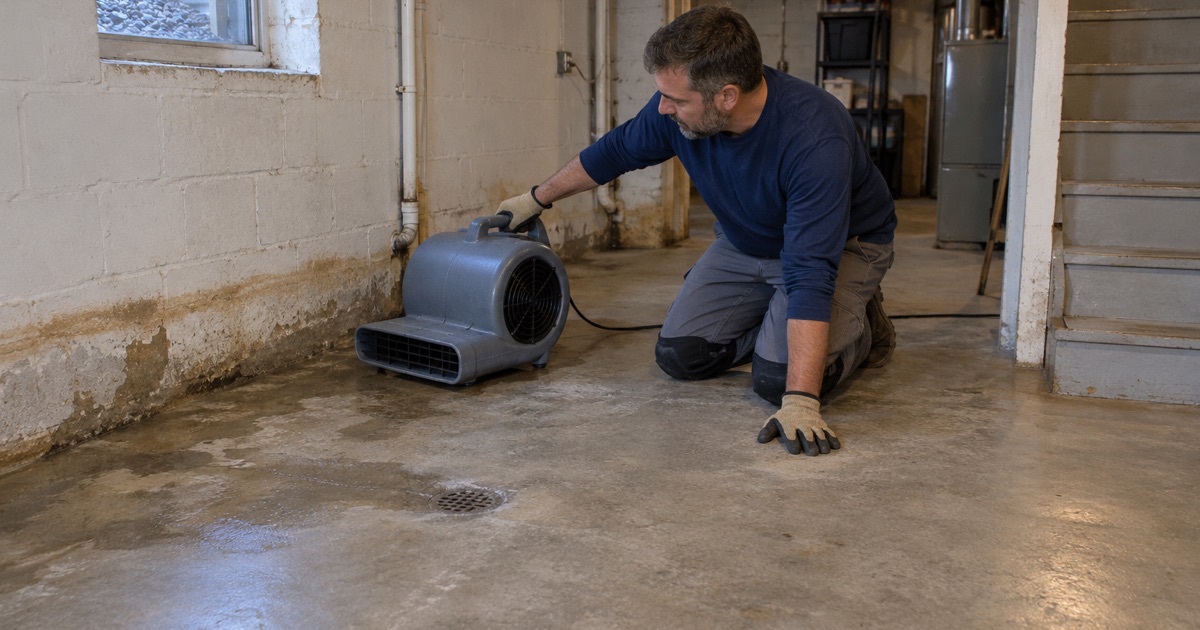
The Cook County hazard mitigation plan carries an annex for La Grange Park, dated July 2019, and in it the village describes its own sewers plainly. The system is 90 percent combined, meaning storm runoff and household sewage share the same pipes. When heavy rain falls over a short stretch, the annex says, the system surcharges and there is not enough capacity to move the water.
That is the village’s own description, not a contractor’s sales line, and it matters to anyone planning a basement floor. A combined line that cannot keep up has to send the water somewhere. It can push back up the private lateral toward the house and out through the lowest opening on the line.
Homestead and Monroe
The annex names the place where this lands hardest: the low-lying Homestead/Monroe area. Low ground matters for a simple reason: a basement drain in a low house sits closer to the level a backed-up main can reach. We do not claim to know which individual homes take water, and the plan does not list them.
If your home is in that part of the village, we treat the floor drain as the first thing to look at on the walkthrough. We ask whether water has come up there before, how high it reached and how long it sat. Those answers shape the floor more than any product choice does.
A Nuisance Problem, Not a Flood History
The same 2019 annex records zero FEMA repetitive-loss properties for the village, and zero severe repetitive-loss properties. So the honest picture is not a town where basements flood year after year. It is a combined system that the village itself says gets overwhelmed in short, heavy storms.
That distinction matters for how we price and plan. A nuisance backup calls for a floor that tolerates an occasional wet cleanup, not a sales pitch about keeping water out. We would rather tell you that now than after a storm.
Looking for epoxy-flooring closer to La Grange? See Epoxy-Flooring in La Grange.
Water That Rises Through the Drain, Not the Wall
Basement water has a few common sources, and each one leaves a different mark on a slab. Seepage through a foundation wall tends to show along the cove where wall meets floor. Hydrostatic pressure under a basement slab can push moisture up through cracks and joints across the field. A surcharged sewer, by contrast, comes up through the lowest opening on the line, typically the basement floor drain.
In La Grange Park, given what the village says about its system, basement water usually arrives at the drain. That shifts the inspection. Instead of starting at the walls, we start at the drain grate, the slab around it and the line of staining or residue a past backup leaves behind.
Reading the Slab Before We Quote
A backup leaves its own evidence. Old paint lifting in a ring around the drain, efflorescence in the low spots and a dark tide line on wall bases can tell us how far water has spread in the past. We read those marks, along with the cracks and any old coating, before we write a number down.
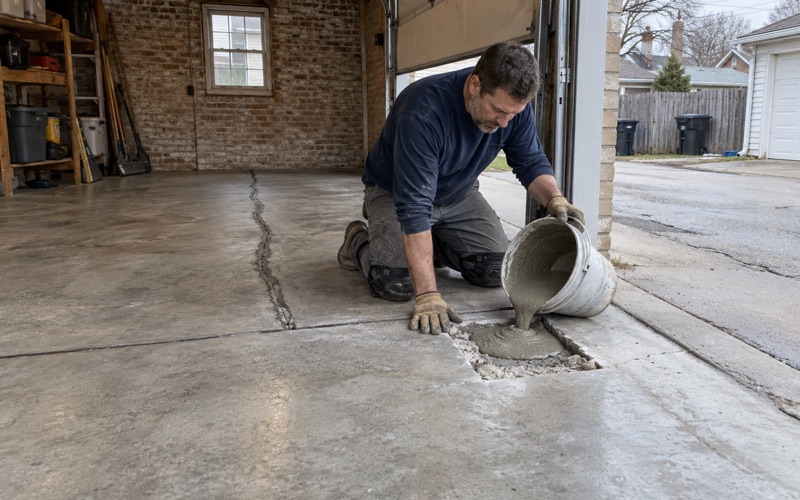
An older basement may carry decades of paint, patching compound and leftover adhesive, and a coating bonded over those layers fails with them. When a slab needs repair or replacement before it can take a coating, we say so plainly rather than coating over the problem.
Moisture Testing Still Comes First
A drain-side backup is an event; vapor moving up through the slab is a condition, and it can be present even in a basement that has never taken sewer water. Moisture testing is priced into our scope as a separate line. Depending on the slab, that means ASTM F1869 calcium chloride tests, ASTM F2170 in-situ relative humidity probes, or a quick ASTM D4263 plastic sheet check as a first read.
Where readings call for it, a moisture-mitigation primer goes down under the system. Moisture is also the first exclusion we read out of the warranty, before the job is sold, so nobody learns about it after a blister appears.
Coating Around a Floor Drain, and What It Cannot Do
Slope Toward the Drain
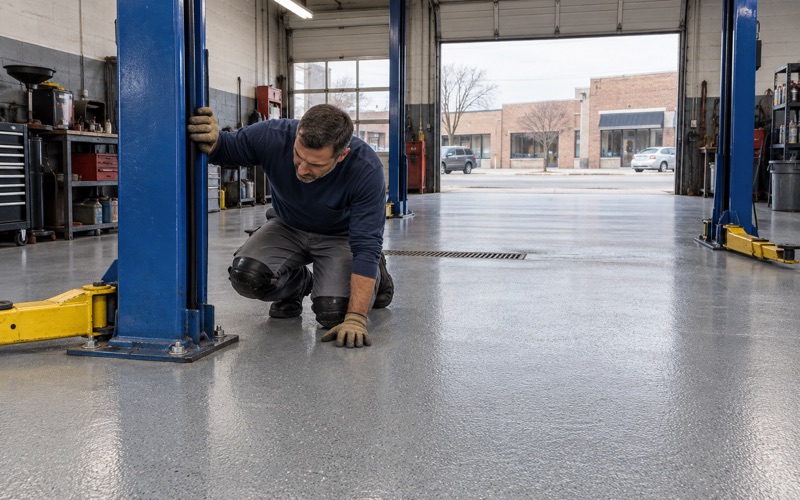
A basement drain only works if the floor around it falls toward it. Some older slabs have settled or been patched flat, so water from a backup or a washing machine spreads out instead of returning to the grate. Before coating, we check that fall and grind or patch where water would otherwise pond.
A coating follows the slab it sits on, so it will not correct a floor that runs the wrong way. If the slope near the drain is badly off, we tell you that the repair comes first and the coating second.
Edges, Grates and Terminations
The drain is where a basement coating takes the hardest use, because it is where water sits longest. We grind a clean margin around the drain body, key the coating into it rather than feathering it to nothing, and keep resin out of the grate and the trap. The grate itself stays removable so a plumber can still reach the line.
The same goes for a sump pit if the house has one. We terminate the system cleanly at the pit rim and leave the pit itself to the plumber or waterproofing contractor who services it.
Cleanup After a Backup
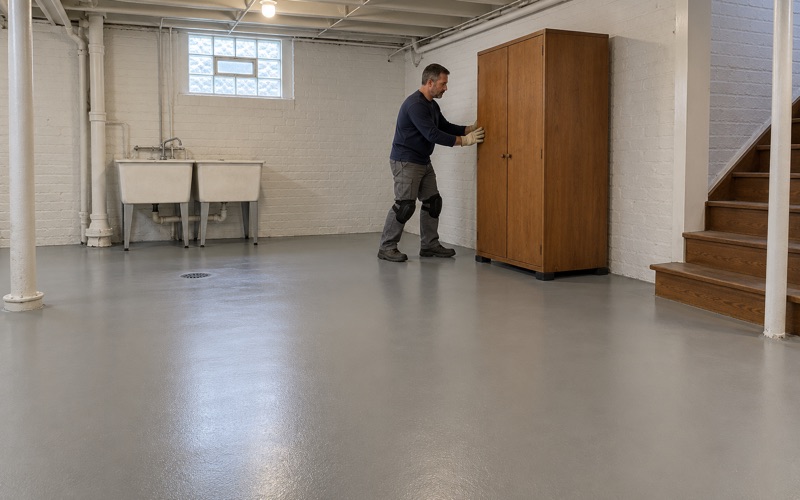
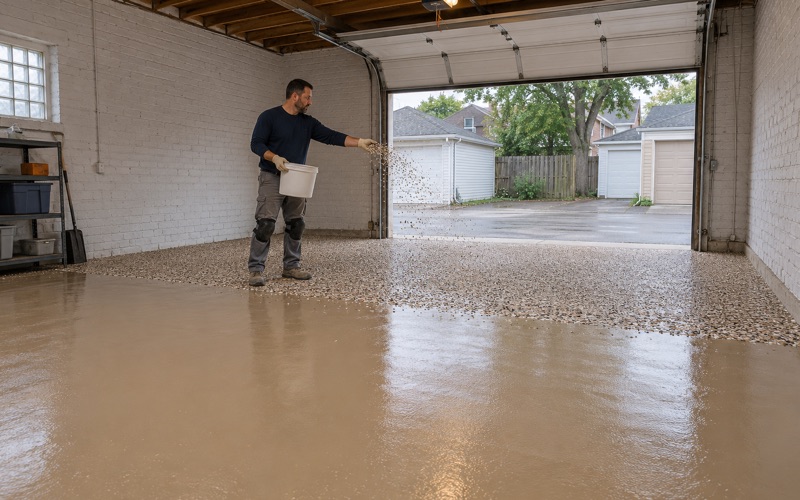
A seamless floor with a 100% solids epoxy base and a polyaspartic topcoat gives sewer water nowhere to soak in, which is the practical benefit here. A light quartz aggregate broadcast adds grip on a floor that may be wet. After a backup, the floor can be cleaned and disinfected rather than replaced, as carpet often has to be.
We plan that cleanup into the floor, too. Seams, saw cuts and wall bases are filled or coved so residue has no edge to hide behind.
What the Coating Is Not
None of this stops sewer water from coming up. A coating sits on top of the slab; the water arrives through the drain, which is a plumbing opening the coating has to leave open. Keeping sewer water out of a basement is a plumbing question about the drain and backflow protection, and that conversation belongs with a licensed plumber before any floor goes down.
We point owners to that question first, every time. We also do not sell a coating as radon work; in Illinois, radon mitigation takes a state license from IEMA.
Salt Creek, Edgewood and Brainard, and the Rest of the Job
Salt Creek runs along the north and west edges of La Grange Park, with Cook County Forest Preserve land on those same sides, including Bemis Woods North and Brezina Woods. The 2019 annex notes that when the creek runs high, residents worry about homes on Edgewood and Brainard Avenues. That is a different concern from the sewer surcharge, and it is worth keeping the two apart.
If you live on one of those streets, we ask about both on the walkthrough: what the creek has done near your property and what the floor drain has done in a hard rain. Neither answer changes the fact that a coating is a finish, not a barrier. Both change how we detail the drain, the wall base and the warranty conversation.
Garages Built for Salt and Brine
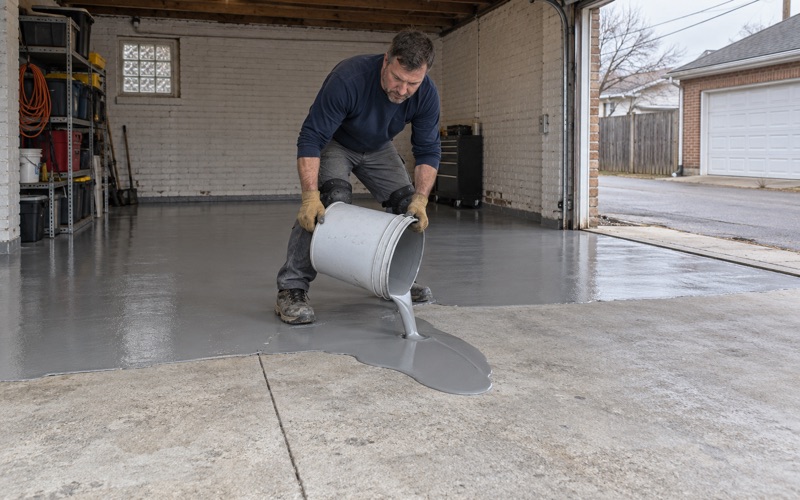
Garage slabs here see the same Cook County winter as every other slab in the area. Tires track in rock salt and calcium chloride brine, and both work at a weak coating and the concrete under it. We build garage floors with a ground profile, a 100% solids epoxy or urethane cement base where the slab calls for it, and a polyaspartic topcoat that resists hot tire pickup.
Curing runs on slab temperature and dew point spread, not on the calendar. An unheated garage in late fall may have to wait for spring, and we would rather say so than install a floor that never cures properly.
Blasting, Paperwork and Scheduling
The 2019 annex also records that quarry blasting in Countryside and McCook has been felt in the village. The annex gives no damage figure, and we do not blame hairline cracks on it. We read each crack for what it is, and we tell you whether it needs a repair before the coating or can be filled as part of the system.
Illinois issues no state license for flooring or coating work, so we confirm the Village of La Grange Park’s own contractor license, bond and insurance requirements, and check with its Building and Inspectional Services department on what a coating scope needs, before a job goes on the calendar. Every home job comes with a written contract and the state’s Home Repair: Know Your Consumer Rights pamphlet, as the Illinois Home Repair and Remodeling Act requires.
Rental units are scheduled with the owner and around the tenants who still need the basement or garage. Grinding dust is collected on site and never washed toward a floor drain, which here most likely feeds the same combined system this page is about.
- 20+ Years Coating Floors
- Moisture Tested Before Quoting
- Free Written Estimates