
Berwyn Epoxy Flooring installs epoxy garage floor systems in Berwyn, IL, serving surrounding cities including Forest Park, Lyons, Brookfield, River Forest and Summit, and we have been doing it for 20+ years. Each floor is ground down to bare concrete, tested for moisture, repaired, and finished with a coating system chosen for the salt and cold this area puts on a garage.
The written proposal spells out the product, how many coats go down and the finished thickness of the floor. That way the floor you paid for can be checked against the floor we installed, and two quotes can be compared line by line rather than by price alone.
On a home job you also get a written contract and the Illinois consumer-rights pamphlet before any work starts, as the Illinois Home Repair and Remodeling Act requires. Since Illinois has no state license for coating work, we confirm the town’s own contractor registration, bond and insurance rules before the job goes on the calendar.
What an Epoxy Garage Floor System Is Built From
Diamond Grinding to a Measured Profile
The first day of every garage job is grinding. A walk-behind diamond grinder with a dust vacuum removes old paint, sealer, oil-stained cream and the weak top skin of the concrete, leaving a surface profile in the range the coating manufacturer calls for, usually described on the ICRI CSP scale.
We do not acid etch. Acid leaves salts behind, opens the surface unevenly, and does nothing to remove a sealer or a painted film, which is why the kit floors you see peeling in sheets were almost always etched rather than ground.
A 100% Solids Epoxy Base Coat
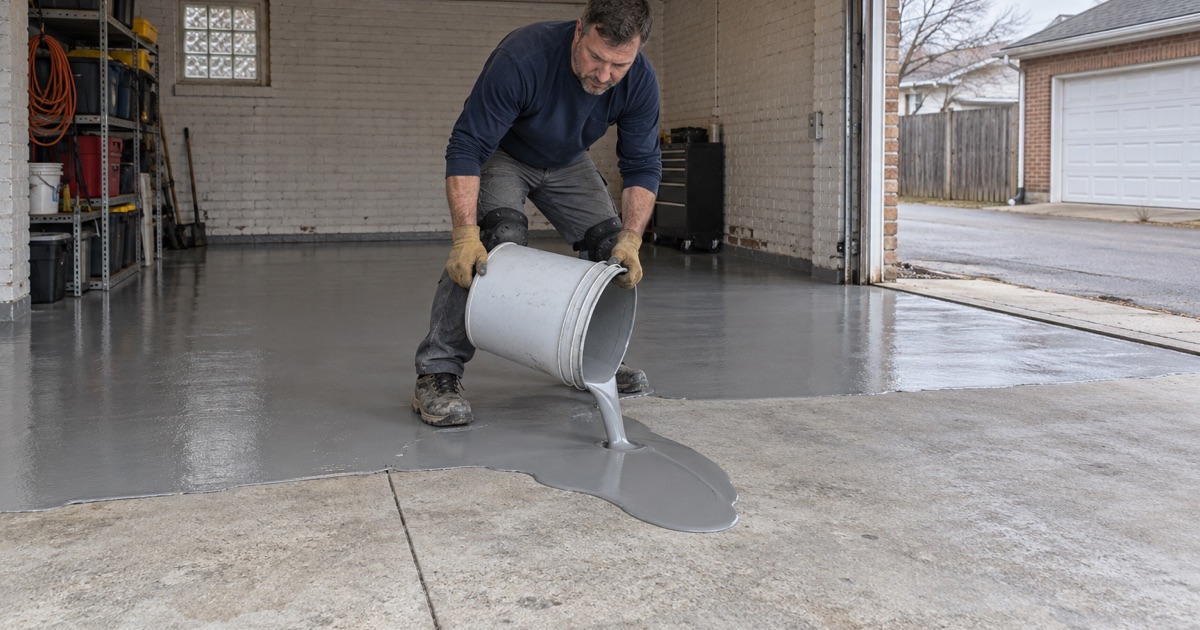
The base coat is a 100% solids epoxy, meaning nothing in it evaporates away as it cures and the film you roll is the film you keep. It soaks into the ground concrete, bonds to it, and gives the floor its body.
Water-based kit epoxies lose much of their thickness as the water leaves. That is the main reason a professional floor can carry a car through winter after winter while a kit floor wears through at the tire tracks within a season or two.
Flake Broadcast and a Polyaspartic Topcoat
Most garage floors we install get a full broadcast of vinyl flake into the wet base coat. Once cured, the loose chips are scraped and vacuumed off, and a clear polyaspartic or urethane topcoat locks the rest in.
The topcoat is the layer that takes the abuse. It resists road salt, gasoline and oil drips, it does not yellow in sunlight the way a bare epoxy does, and it is the layer that decides how the floor looks after the third winter.
Berwyn Garages and the Slabs Under Them
Detached Alley Garages
Most Berwyn homes have a detached one- or two-car garage at the back of the lot, facing the alley. We stage the job from the alley side, run the grinder vacuum on site, and collect the dust in bags rather than washing anything toward the alley drain or a neighbor’s apron.
If you share a garage in a two-flat, we work out the schedule with the owner and the tenants who park there, so everyone knows which days the garage is closed and when cars can return.
Slabs With Nothing Under Them
Many older garage slabs were poured right on the ground, with no plastic sheet beneath them, and building codes still allow a detached garage slab to go without one under the IRC R506.2.3 exception. That makes moisture testing more important in a garage than people expect.
We check with a relative humidity probe under ASTM F2170 or a calcium chloride test under ASTM F1869 and compare the reading to the product’s limits. If the slab is damp, a moisture-mitigation primer goes on first rather than gambling on a standard base coat.
Cracks, Spalls and Slabs That Need Replacing
We look at every crack before quoting. Shrinkage cracks and small chips at the door are filled with a rigid repair material and ground flush, and control joints are either filled or kept open depending on whether the slab is still moving.
When a floor has heaved, sunk toward the drain, or broken into sections that rock under weight, we say so plainly. Coating a moving slab only paints over the next crack, and the money is better spent on a new slab first.
Salt, Cold and Hot Tires
Calcium Chloride Brine and Rock Salt
Winter roads here are treated with rock salt and calcium chloride brine, and every car brings some of it home. On bare concrete, that salt water soaks in, freezes and recrystallizes, and the surface starts to scale and pop near the garage door.
A coated floor keeps the salt on top, where it can be squeegeed out the door or rinsed off in a thaw. We choose topcoats rated for chemical resistance so the salt film does not cloud or soften them over the season.
Curing Against Slab Temperature and Dew Point
Resins cure by chemical reaction, and that reaction slows sharply on a cold slab. We read the slab temperature and the gap between it and the dew point before we open a pail, because a coating applied too close to the dew point can form amine blush, a greasy film that weakens the bond of the next coat.
An unheated detached garage spends a good part of the winter below what most products will tolerate. In that case we book the job for spring and say so, rather than leaving you with a floor that never fully cures.
Hot Tire Pickup
Tires heat up on the highway and soften a weak or poorly bonded coating when you pull in. As they cool overnight they grip the surface, and when you back out the next morning they can tear patches of coating loose.
The cure for hot tire pickup is not a thicker coat of paint. It is a ground surface, a full-strength base coat and a topcoat with the hardness to stay put, which is the system we install as standard.
Warranty Exclusions, Moisture First
Every coating warranty has a list of things it does not cover, and moisture vapor from the slab sits at the top of almost every one. Structural cracks, standing chemical spills and damage from steel jack stands or snow shovel edges usually follow.
We read that list to you at the estimate, before anything is signed. A homeowner who knows the slab tested damp and that a mitigation primer was added has a clear picture of what the warranty actually protects.
Garage Floors for Homes, Two-Flats and Small Businesses
Choosing Flake, Quartz or a Solid Color
Full flake is the most forgiving finish for a working garage, because the chips hide dust, salt residue and small tire marks between cleanings. Partial flake gives a lighter speckle at a lower material cost, and quartz broadcast adds a sandpaper grip for steep aprons and ramps.
A solid gray or tan coating still makes sense in a workshop garage, where tools get dropped and paint touch-ups need to blend. We bring physical samples to the estimate so you can see each finish on the floor in your own light.
Fleet Garages and Contractor Storage
Small businesses use garages differently than homeowners do. A landscaping truck, a plumbing van or a row of fleet cars brings in more fluids, heavier tires and more daily turning than one family car.
For those floors we build thicker, specify a topcoat with stronger chemical resistance, and plan the work for a weekend or an off-season week so the vehicles are only displaced once.
Our Step-by-Step Epoxy Garage Floor Process
Step 1: Slab Assessment and Moisture Reading
We walk the floor, map cracks and old coatings, take a moisture reading, and then write a proposal naming the product, the coats and the finished thickness. The written contract and consumer-rights pamphlet go to you at the same time, before anything is scheduled.
Step 2: Grinding and Repair
The slab is ground with dust collection, cracks and spalls are filled, and the surface is vacuumed clean before any coating is mixed. Repair materials are given time to harden so they grind flat with the slab around them.
Step 3: Base Coat and Broadcast
The base coat goes down within the temperature window, and flake or quartz is broadcast into it while wet. We check slab temperature against the dew point again that morning, because conditions in a detached garage change overnight.
Step 4: Topcoat and Hand-Off
After scraping, the topcoat is applied, and you get written dates for foot traffic and parking along with care instructions for the first winter. Those cover squeegeeing salt slush out, which cleaners to avoid, and why steel jack stands need a pad under them.
- 20+ Years Coating Floors
- Moisture Tested Before Quoting
- Free Written Estimates