
Berwyn Epoxy Flooring installs flake epoxy floor systems in Berwyn, IL, serving surrounding cities including Forest Park, Lyons, Brookfield, River Forest and Summit. A flake floor is the finish we put down more than any other in garages, because in 20+ years nothing has done a better job of hiding winter salt, tracked-in grit and the small flaws of an older slab.
The look comes from the chips, but the life of the floor comes from what is under them. Every flake floor we install is built on a diamond-ground slab, a moisture reading and a full-strength base coat, and the proposal names each layer and the finished thickness so you can check it.
We bring physical samples to the estimate, set them on your actual slab in your own light, and talk about how each blend will look after a few months of real use rather than in a showroom photo.
How a Flake Floor Is Built
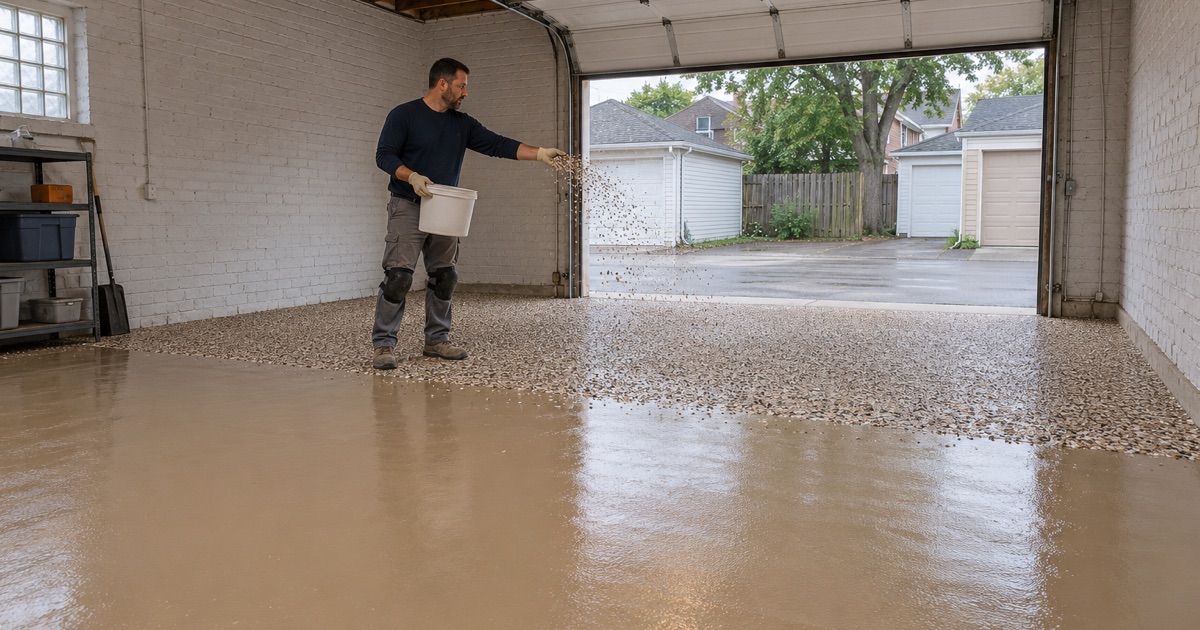
The Base Coat
The base coat is a 100% solids epoxy or a polyaspartic, rolled onto freshly ground concrete. It bonds to the slab and holds the chips, so it has to go on at the right thickness and inside the right temperature and dew point window.
If the base is too thin, chips sink unevenly and bare spots appear. If the slab is too cold, the base cures slowly and the bond suffers, which is why an unheated garage in deep winter usually waits for spring.
Broadcasting the Chips
While the base coat is still wet, the vinyl chips are thrown by hand across the floor in an even spray. For a full broadcast we keep throwing until the base can hold no more, which installers call broadcasting to refusal.
A full broadcast hides the base entirely and gives the floor uniform coverage. A partial broadcast leaves the base color visible between scattered chips for a lighter look.
Scraping and the Clear Topcoat
Once the base has cured, the floor is scraped to knock down chips standing on edge, then vacuumed to remove the loose ones. That step decides how smooth the finished floor feels.
A clear polyaspartic or urethane topcoat then locks the chips in. It is the wear surface, it resists salt, oil and gasoline, and it keeps the colors from yellowing in sunlight.
Choosing Blends and Chip Sizes
Color Blends That Hide Real Dirt
Most flake floors use a blend of three to five colors. Mid-tone blends of gray, tan and black hide dust, salt residue and tire marks better than very light or very dark blends.
We ask how the space is used before suggesting a blend. A workshop that sees sawdust and a garage that sees winter slush do not hide dirt the same way.
Chip Size and Pattern Scale
Larger chips make a bold, almost terrazzo-like pattern and hide more slab texture. Smaller chips read as a fine, consistent texture from standing height and look more refined in a basement or showroom.
In a large commercial space, larger chips help the pattern hold up visually at a distance. In a small basement room, smaller chips keep the floor from looking busy.
Sheen and Texture
Clear topcoats come in gloss and satin. Gloss gives depth and makes chip colors pop, while satin reduces glare and hides fine scratches in a working garage.
Texture is controlled by how many clear coats go over the chips. One coat leaves a grippy feel, and a second coat smooths the surface for easier mopping.
Why Flake Works in Berwyn Garages
Winter Salt and Slush
Road salt and calcium chloride brine come home on every car all winter. A full flake floor hides the white residue between cleanings, and the topcoat keeps the salt from soaking into and scaling the concrete. In a thaw, the floor can be squeegeed out the door or rinsed, and the textured surface stays safer underfoot when wet than a smooth gloss coating.
Older Slabs With Character
Many garages here have slabs that have been patched, painted or cracked over the decades. After grinding and repair, a full flake broadcast hides most of that history in a way a solid color cannot.
It will not hide a moving slab, though. If cracks show signs of active movement, we tell you before you choose a coating.
Detached Alley Garages
Most Berwyn homes have a detached garage facing the alley. We set up from the alley side, collect all grinding dust on site, and keep chips and materials contained so nothing ends up in the alley drain or a neighbor’s apron. If the garage is shared in a two-flat, we plan the schedule with the owner and tenants so everyone knows when cars must be moved.
Flake Floors Beyond the Garage
Basements and Laundry Rooms
In a basement, flake hides lint and dust and gives a finished look to a slab that may carry decades of paint and patches. The slab must pass a moisture test, and a mitigation primer is added when the readings call for it. Near washers and sinks, we add a fine anti-slip additive to the topcoat so the floor is safer when wet.
Commercial Back-of-House Areas
Stockrooms, break rooms, locker rooms and clinic support spaces use flake floors because they are durable and easy to clean. A full broadcast stands up to carts and foot traffic. For these spaces, we schedule work overnight or on weekends so the business keeps running.
Workshops and Hobby Spaces
Workshops benefit from the texture and from how easily a chipped area can be patched. A dropped tool that nicks a flake floor can usually be repaired with a small amount of base, chips and clear without the patch standing out. That ease of repair is one of the practical reasons flake floors remain so common.
- 20+ Years Coating Floors
- Moisture Tested Before Quoting
- Free Written Estimates