
Berwyn Epoxy Flooring installs commercial epoxy flooring in Berwyn, IL, serving surrounding cities including Forest Park, Lyons, Brookfield, River Forest and Summit. For 20+ years we have coated warehouse aisles, auto repair bays, clinic corridors, stockrooms and storefronts, and the common thread is that the floor has to fit around a business that cannot simply close for a week.
A commercial proposal from us names the system for each area of the building, the finished thickness, the cure times and the hours we will be working. Facility managers get a schedule they can plan staff and deliveries around, and owners get a record of what was installed.
Preparation is the same discipline we bring to every floor: mechanical grinding or shot blasting, moisture testing and a full read of cracks, joints and old coatings before any product is chosen.
Matching the System to the Traffic
Thin-Film Coatings for Light Duty
Stockrooms, offices, clean storage and light assembly areas usually need a durable, cleanable surface rather than heavy impact resistance. A thin-film system of 100% solids epoxy with a urethane or polyaspartic topcoat fits that use and cures quickly. Thin films are also the easiest to recoat later, which keeps long-term maintenance costs predictable for spaces that only see foot traffic and carts.
Slurry and Mortar Systems for Heavy Use
Forklift aisles, loading docks and heavy shop floors take impacts and point loads that would chip a thin coating. For those areas we install thicker systems such as broadcast slurries or troweled epoxy mortars that add real body to the surface.
We often mix systems in one building, putting the heavy build where the traffic turns and the lighter system where it does not, so the budget goes where the wear actually happens.
Chemical and Slip Resistance
Auto shops, plating and cleaning operations each bring their own chemicals. We select topcoats against the actual fluids on your floor, from motor oil and brake fluid to cleaning agents.
Where floors get wet or oily, quartz or fine aggregate is broadcast into the system to add grip. The texture is tuned so the floor stays cleanable while giving workers secure footing.
Preparing a Commercial Slab
Shot Blasting and Grinding
Large open floors are often shot blasted, which opens the surface quickly and leaves a uniform profile for the coating to grip. Edges, corners and areas around equipment are diamond ground.
Both methods run with dust collection, which matters in an occupied building. Acid etching is not part of our process on any commercial floor.
Joints, Cracks and Old Coatings
Commercial slabs usually have control joints that have been chipped by hard wheels for years. We repair joint edges with epoxy mortar and fill them with a semi-rigid filler that supports the edge while allowing slight movement.
Old coatings are tested and removed if they are failing. A new system laid over a poorly bonded old coating inherits all of its weaknesses.
Moisture in Older Commercial Slabs
Many older commercial buildings in this area have slabs with no vapor retarder below them. We test with ASTM F2170 relative humidity probes or ASTM F1869 calcium chloride kits before specifying a system. If the readings are high, a moisture-mitigation primer is added to the system and the warranty implications are explained before the contract is signed.
Floors by Type of Business
Warehouses and Light Industrial Bays
Warehouse floors are about durability and visibility. We combine heavy-duty systems in traffic lanes with lighter coatings in storage areas, and build aisle lines and hazard zones into the floor itself. A bright, light-colored floor also reflects more light, which many owners notice immediately in older buildings with limited fixtures.
Auto Repair and Fleet Maintenance Bays
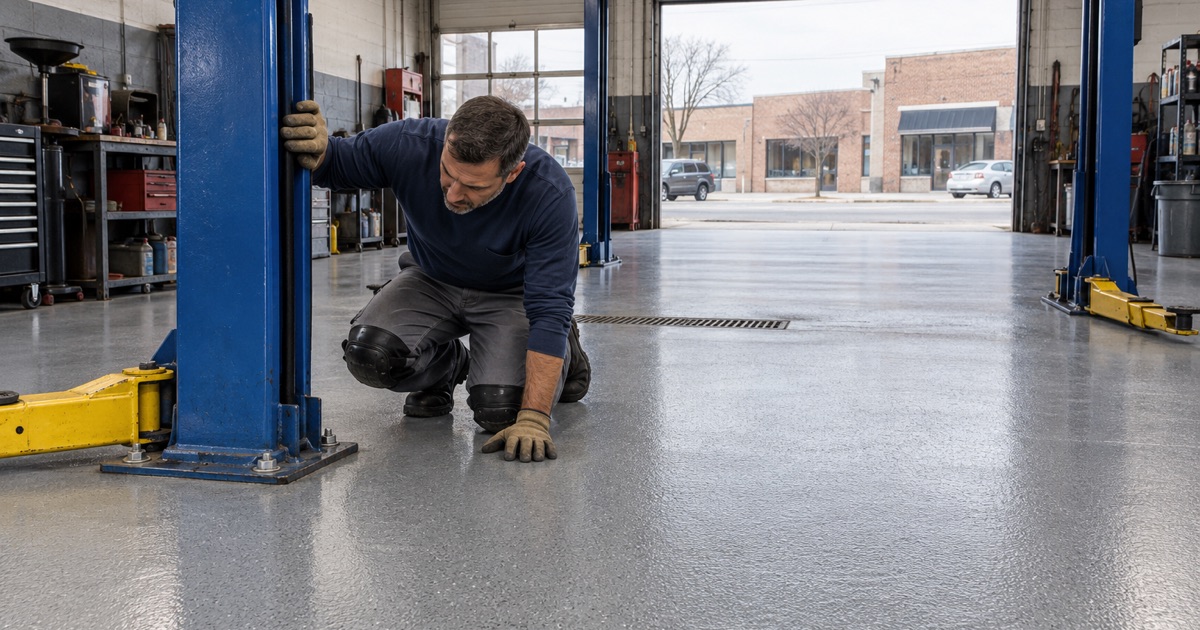
Service bays deal with oil, coolant, brake fluid, dragged jacks and lifts anchored into the slab. We use chemical-resistant topcoats, detail carefully around trench drains, and coordinate with your lift installer so anchors are set into sound concrete. A coated bay is easier to sweep and degrease, which helps keep the shop safer and cleaner day to day.
Clinics, Retail and Tenant Spaces
Medical offices and clinics need seamless, cleanable floors that can be installed in phases without disrupting patients. Retail spaces need a floor that looks good and holds up to foot traffic and fixtures. For tenant turnovers, we remove old flooring and adhesive and coat or polish the slab inside the lease turnover window.
Scheduling, Compliance and Records
Overnight and Weekend Work
Most commercial jobs are phased around operations. We schedule grinding, which is the loudest step, for hours that suit you and your neighbors, and use fast-curing products when an area has to return to service quickly. The schedule is written into the proposal so managers can plan staff, deliveries and customer access.
Illinois VOC Limits
The Chicago area is a 2015 ozone nonattainment area, and Illinois limits VOC content in architectural and industrial maintenance coatings under 35 Ill. Adm. Code Part 223 Subpart C. Those limits apply to the contractor who applies the product, not only to the manufacturer. We choose compliant products and keep the documentation on file, which also helps if a landlord or inspector asks.
Local Licensing, Bonds and Insurance
Illinois does not issue a state license for flooring or coating contractors, so the rules come from each municipality. Berwyn, for example, requires a city contractor license and bond before a permit is issued. We confirm each town’s requirements and provide certificates of insurance naming the owner or landlord before work begins.
Keeping a Commercial Floor in Service
Cleaning Programs That Protect the Topcoat
A coated floor is only as durable as the way it is cleaned. Auto scrubbers with soft pads and a neutral or mildly alkaline cleaner keep the surface clear of grit, which is what slowly dulls a topcoat in a busy aisle.
Harsh degreasers and acidic cleaners can soften or etch some topcoats over time. We leave a written cleaning program matched to the products installed, so your staff or janitorial contractor is not guessing.
Recoats Instead of Replacement
In the heaviest traffic paths, the topcoat wears first. Before it wears through to the base coat, the floor can be scuffed and given a fresh topcoat, usually over a weekend, without grinding the whole system off.
Planning that recoat cycle into the facility budget is far cheaper than letting a floor wear down to bare concrete and starting over. We note the expected recoat interval for each area in the closeout records.
- 20+ Years Coating Floors
- Moisture Tested Before Quoting
- Free Written Estimates