Berwyn Epoxy Flooring brings more than 20 years of epoxy flooring in Chicago Ridge and the surrounding suburbs to garage and basement jobs, and the first question we ask is rarely about flake color. It is about where everything now sitting on that floor is going to live for the next few weeks. A coating cannot go down around a workbench, a chest freezer and forty cartons of holiday decorations, and the floor has to stay empty from the first pass of the grinder until the topcoat is ready for foot traffic and then for cars.
That makes clearing the room part of the job plan rather than an afterthought. In this village, the most common way homeowners solve it, a portable storage container in the driveway, comes with its own permit, a 30-day clock and a short list of placement and content rules. We build our schedule around those rules so the floor is finished and cured before the container has to leave.
What follows is how we sequence a residential floor here: emptying the space, reading the village rules, working inside the permit window and keeping the wrong things out of the box. None of it is complicated, but each piece has to land in the right order.
A Floor Job Starts With an Empty Room
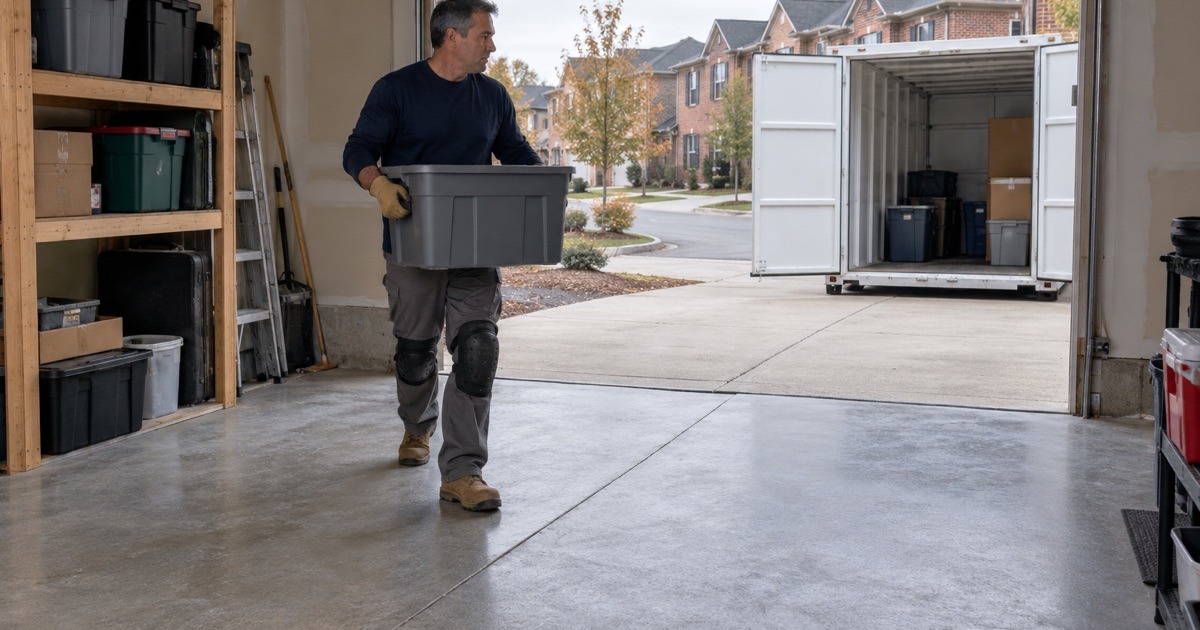
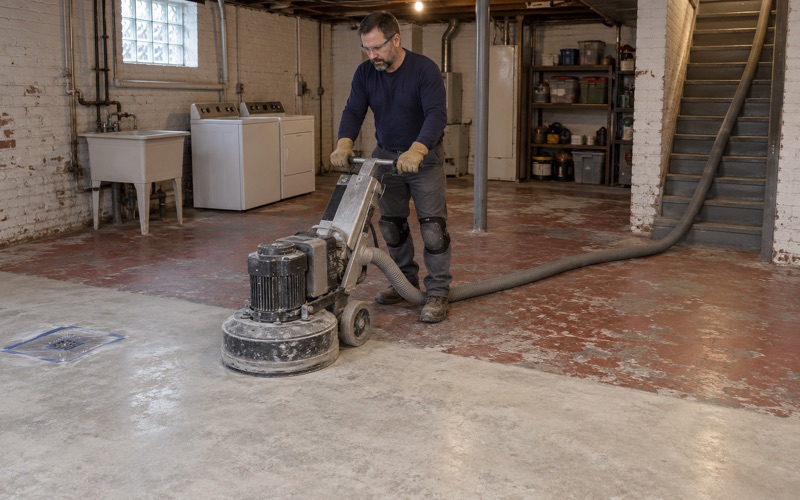
Every system we install begins with mechanical preparation. We open the slab with a diamond grinder or a shot blaster to the ICRI CSP profile the coating calls for, and we never acid etch. That equipment needs the whole floor, wall to wall, because edges and corners are exactly where a coating lets go first when they are skipped.
What has to come out
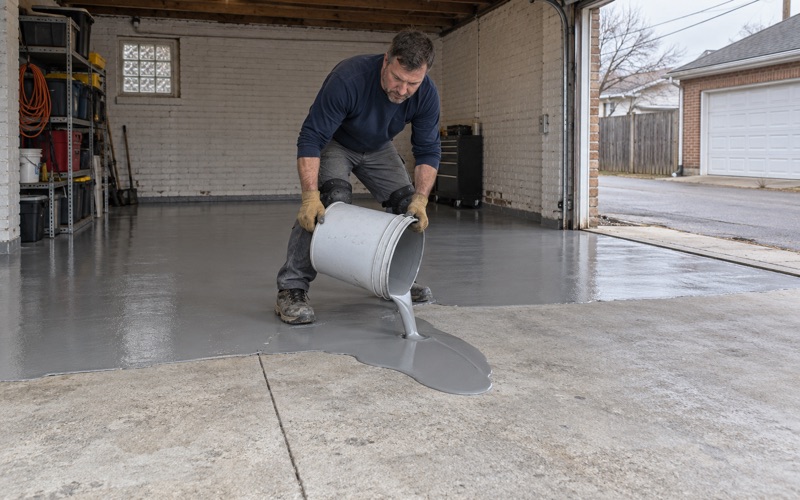
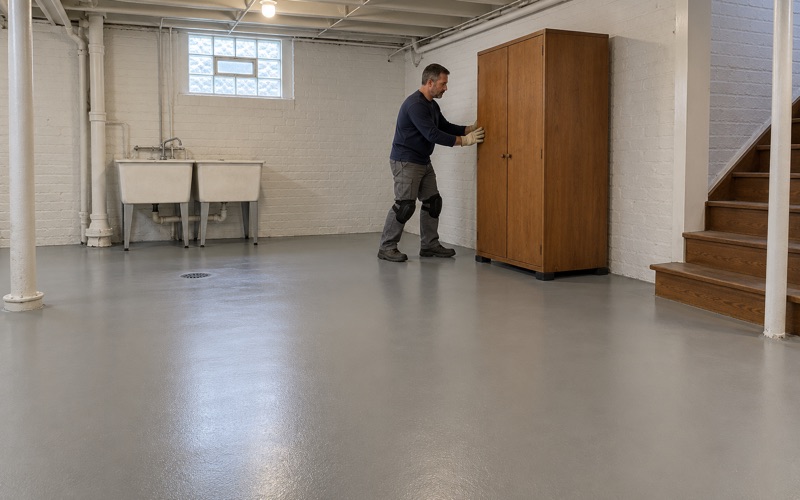
In a garage, that means cars, bikes, shelving units, the second refrigerator, lawn equipment and everything stacked along the walls. In a basement it means movable laundry appliances, storage racks, furniture and the boxes that have collected in the corners. Fixed equipment such as a water heater or furnace stays put, and we detail the coating around its base.
Why we look before you pack
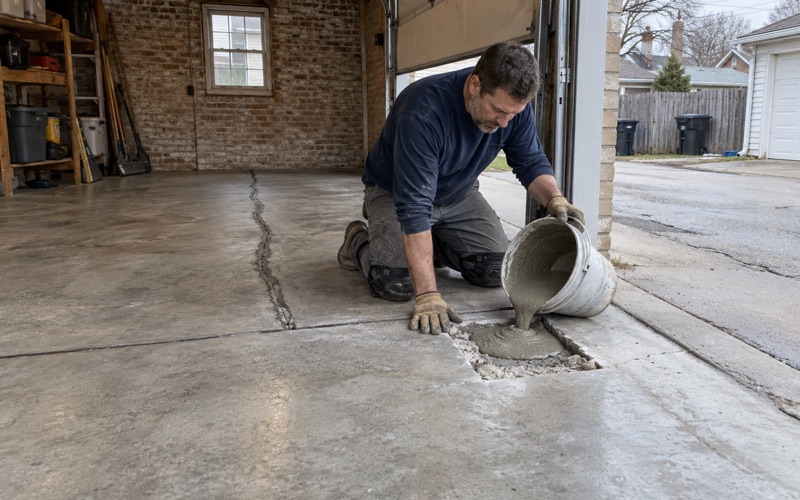
We like to see the floor before you empty it and again once it is clear. Cracks, patches, old paint and leftover adhesive tend to hide under the things people store longest, and we read them before quoting rather than discovering them mid-job. If a section of slab needs repair or replacement before it can take a coating, we say so plainly at that stage, because it changes how long the room has to stay empty.
The village takes its name from ridges of dirt the Wabash Railroad hauled out during construction for the 1893 Columbian Exposition, but most of its homes are far newer than that story. Much of the housing in Chicago Ridge went up between 1960 and 1989, and a slab with that many years of service may carry earlier paint or sealer. We check for those layers before choosing a system, since a coating bonded to a failing old film fails with it.
Moisture is tested, not assumed
Moisture testing sits in the scope as its own line item, on a basement slab and a garage slab alike. Depending on the floor, we use ASTM F2170 in-situ relative humidity probes or ASTM F1869 calcium chloride testing, sometimes screening first with an ASTM D4263 plastic sheet test. A high reading changes the primer and the schedule, which is why we want that answer before you book anything.
Basements and what a coating will not do
A basement is often emptied because water has already been a problem down there. We say plainly that a floor coating does not stop a sewer backup, and we point to the floor drain and the backflow question first. Sump pits and floor drains are detailed so the coating ends cleanly at their edges instead of sealing over them. Nor do we sell a coating as radon reduction; in Illinois that work takes a state radon mitigation license.
Looking for epoxy-flooring closer to Palos Hills? See Epoxy-Flooring Services in Palos Hills.
The Village Container Permit and the Permits Behind It
The Village of Chicago Ridge regulates portable storage containers through its Temporary Storage Container permit, often called the PODS permit, under Ordinance 19-10-20. The fee is $25 and the permit runs for 30 days. One 30-day extension is available, but it takes a new application and another fee.
The permit is the property owner’s or tenant’s application, and the company supplying the container has to provide a $100,000 liability insurance certificate. Ask about that certificate when you book the unit so the paperwork is complete when it reaches the village.
Driveway only
At a detached house, townhouse or two-flat, the container may sit only on the driveway or a similar hard surface. It cannot go on the street, in the alley, on the sidewalk, on the parkway or on the lawn. At other building types it belongs on a hard-surfaced parking lot where it does not impede traffic.
Sixteen feet and one per property
Residential containers are capped at 16 feet long, and the rule allows one per property. If a full two-car garage will not fit in a single 16-foot unit, plan to sell, donate or store the overflow elsewhere rather than counting on a second box.
Our side of the paperwork
The container permit is yours, but the floor work answers to its own rules. The village permit sheet says all construction and remodeling work on or in any type of building needs a building permit, with the application completed by the contractor doing the work and building-department-approved plans attached. No permit issues until every contractor on the job is registered at Village Hall, 10455 South Ridgeland Avenue, with a certificate of insurance and a $10,000 surety or performance bond, and we confirm those requirements before your job goes on the calendar.
Fitting Prep, Coating and Cure Inside 30 Days
Thirty days is usually plenty for the floor itself. The risk sits in the days around it: a container delivered a week before anyone starts packing, a repair that turns up once the room is empty, or a cold stretch that pushes cure times out. We sequence the job so the container arrives shortly before the room needs to be clear.
Where the container lands
A container on the driveway often sits right in front of the garage door we need to work through. Before delivery we talk through where the unit will go so our grinder, dust collection and mixing station still have a clear path in. On a lot with a detached alley garage we can usually stage from the alley instead, and grinding dust is collected on site, never washed toward a drain. Mention any parked cars, trailers or a narrow side yard when we talk, because those decide whether the container goes toward the street end of the driveway or near the house.
A typical sequence
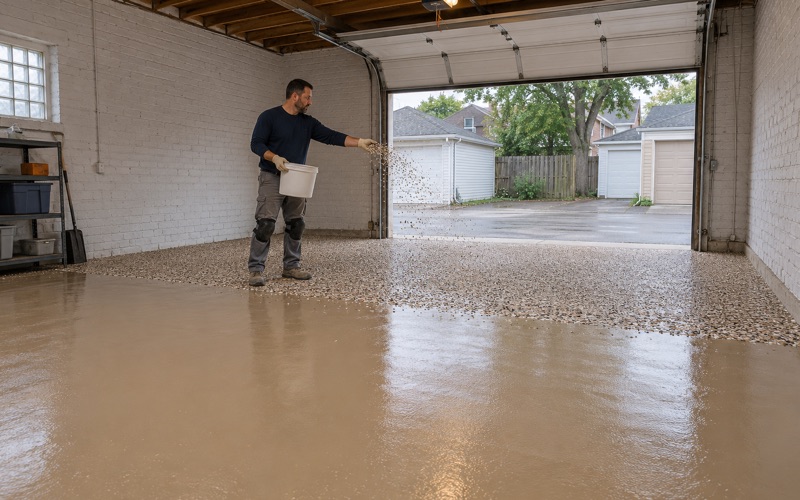
Clearing comes first, then grinding or shot blasting, crack and joint repair, and finally the coating system named in your proposal. That proposal lists the product, the system build and the finished thickness, so whether it is 100% solids epoxy with a vinyl flake broadcast or a quartz aggregate system under a polyaspartic topcoat, you can check what went down against what was quoted.
When a moisture test comes back high, the build adds a moisture-mitigation primer before the base coat. Planned from the start, that extra step rarely threatens the permit window.
Cure follows the slab, not the calendar
We schedule coats and recoat windows against slab temperature and the dew point spread at the slab surface rather than a date circled on the calendar. A coat applied too close to the dew point can develop amine blush or adhesion trouble that only shows up later. In an unheated detached garage during the colder months, we will tell you plainly when the work should wait for spring, and that conversation belongs before you pay for a 30-day permit.
Leave room before moving back in
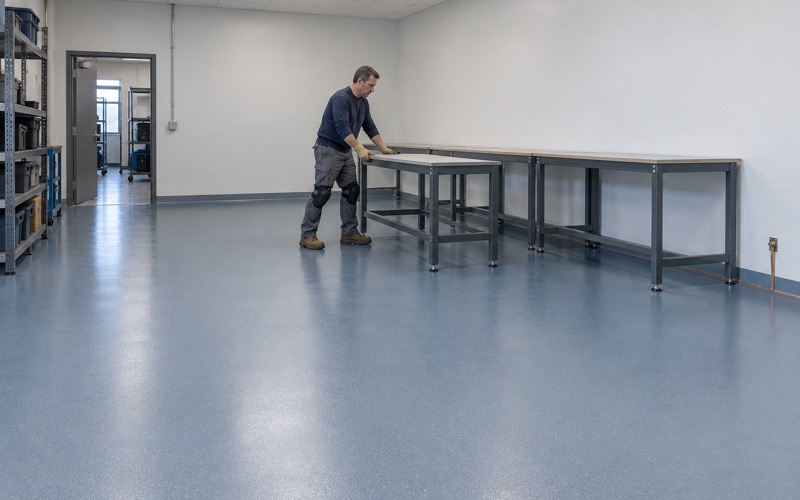
Foot traffic returns well before cars and heavy storage do. We give you specific return-to-service times for your system, and the container should stay until they have passed, because rolling a loaded dolly across a fresh topcoat is the fastest way to mark it. A garage floor built to stand up to calcium chloride brine, rock salt and hot tire pickup still needs its full cure to get there.
What Stays Out of the Container
The village limits container contents to nontoxic, nonflammable personal property, and a garage is where most of the excluded items live. Gas cans, propane cylinders, paint thinner, solvents and lawn and garden chemicals do not belong in the unit. The container is also meant only for temporary storage while household items are loaded and unloaded, not for running a business out of.
Aerosol spray paint, charcoal lighter fluid, the spare gas for the snowblower and half-empty cans of stain are easy to overlook when packing gets rushed. We suggest pulling them off the shelves first, before the boxes go out, so nothing flammable rides into the container by accident.
A separate plan for fuel and chemicals
Decide where those items will go before we arrive, whether that is a shed, a neighbor’s garage or a household hazardous waste drop-off for anything you no longer want. Please do not leave them in a corner of the room we are grinding. The floor has to be fully clear, and those are exactly the products that should be nowhere near a mixing station.
What we bring onto the property
Our own materials arrive with the crew and leave with it, so nothing of ours ends up in your container. The coatings we choose fall within the Illinois limit on VOC content, a limit that binds the installer as well as the manufacturer.
Paperwork before day one
Every home job gets a written contract and the Home Repair: Know Your Consumer Rights pamphlet before work starts, as the Illinois Home Repair and Remodeling Act requires. We also read the warranty exclusions aloud before the job is sold, with moisture named first. By the time the container is on your driveway, you know what is going down, how long it needs and what the warranty does and does not cover.
- 20+ Years Coating Floors
- Moisture Tested Before Quoting
- Free Written Estimates